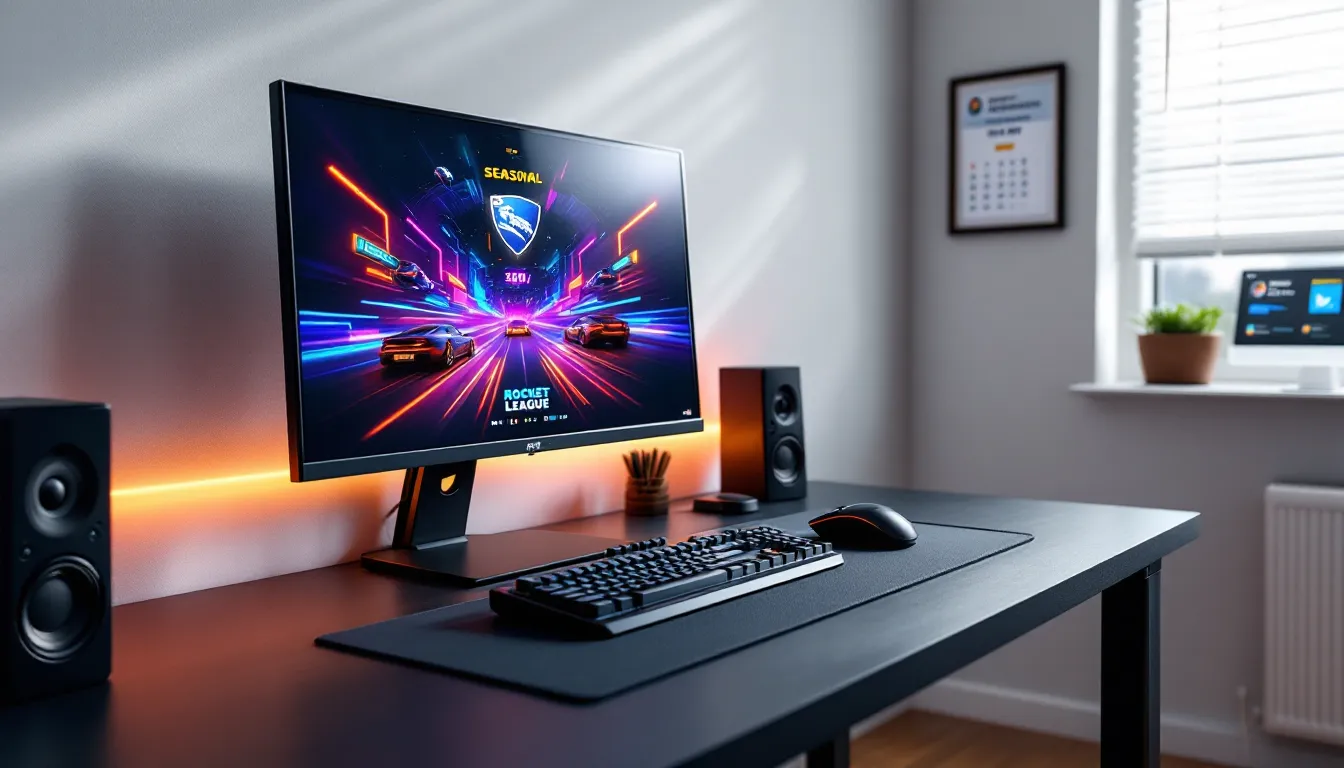
Waiting for a new Rocket League season to drop is a weird mix of excitement and impatience. You’re ready for fresh cosmetics, a clean competitive slate, and maybe some meta-shaking updates, but Psyonix doesn’t always telegraph the exact date until the last minute. If you’ve been refreshing Twitter or the in-game news tab wondering when the next season kicks off, you’re not alone.
This guide breaks down everything you need to know about Rocket League’s seasonal schedule, what’s coming next, and how to prepare so you’re not scrambling when the countdown hits zero. Whether you’re chasing Grand Champion rewards or just want that shiny new goal explosion, here’s the rundown.
Key Takeaways
- Rocket League seasons typically run 90–120 days with new season starts usually announced 7–10 days in advance, though Psyonix follows a predictable quarterly pattern (December, March, June, September).
- When the new Rocket League season starts, expect a ranked reset where your MMR is soft-adjusted toward the median and you’ll play 10 placement matches per playlist to determine your starting rank.
- Finish your competitive season rewards before the reset by meeting the rank requirement and earning 10 wins at that rank level, as rewards must be claimed by the season’s end date or you’ll miss exclusive cosmetics.
- Maximize your Rocket Pass progression by joining parties (50% XP bonus), completing Weekly Challenges immediately each Wednesday, and focusing on high-XP game modes to reach tier 110 in 40–45 days.
- On new season launch day, avoid jumping into ranked during the first 2–4 hours due to server congestion; instead, warm up in casual matches or freeplay until matchmaking stabilizes.
- Season 18 is predicted to launch between April 2–9, 2026, bringing new cosmetics, potential gameplay balance tweaks, and mid-season limited-time modes based on Psyonix’s historical release patterns.
Understanding Rocket League’s Seasonal Schedule
Rocket League operates on a predictable, if not perfectly rigid, seasonal cadence. Each season brings a new Rocket Pass, competitive rank reset, and typically some balance tweaks or feature additions. Knowing the rhythm helps you plan your grind and avoid missing out on time-limited rewards.
How Long Does Each Rocket League Season Last?
Most Rocket League seasons run for approximately 90 to 120 days, or roughly three to four months. Psyonix tends to aim for the 90-day mark, but extensions happen when major updates need more development time or when real-world events (like holidays or esports schedules) affect the timeline.
For example, Season 12 launched in December 2023 and ran until March 2024, about 95 days. Season 13 pushed slightly longer at 105 days due to a mid-season event expansion. The variation isn’t huge, but it’s enough that you can’t set your watch by it.
The season length matters for a few reasons:
- Rocket Pass progression: You need roughly 100-110 hours of playtime to finish the full pass without purchasing tiers, assuming average XP gains.
- Competitive decay: Your MMR (matchmaking rating) doesn’t decay between seasons, but your visible rank resets, so longer seasons mean more time to climb.
- Limited-time modes and events: These usually rotate mid-season and are timed around the overall seasonal arc.
Typical Release Patterns and Timing
Psyonix follows a quarterly release pattern, which means new seasons typically land in:
- December/January (Winter season)
- March/April (Spring season)
- June/July (Summer season)
- September/October (Fall season)
Seasons almost always start on a Wednesday, usually around 10 AM PT / 1 PM ET / 6 PM GMT. Psyonix picked Wednesdays to avoid weekend server strain and give the team a full work week to monitor stability post-launch.
There’s usually a one-week gap between seasons, sometimes as short as three days, occasionally stretched to two weeks if a major patch needs QA. During this interseason window, the old Rocket Pass expires, competitive playlists go offline briefly, and players scramble to claim their season rewards before they vanish.
One quirk: Psyonix announces the exact start date only about 7-10 days in advance, even though the season’s general timing is predictable. They’ll tease content earlier (trailers, dev blogs), but the hard date comes late. It’s frustrating, but it gives them flexibility if bugs pop up.
Current Season Status and What’s Next
As of March 2026, Rocket League is nearing the end of Season 17 (assuming the quarterly pattern held through 2025-2026). The current season launched in early December 2025, which puts the expected wrap-up somewhere in late March or early April 2026.
Psyonix hasn’t officially confirmed the Season 18 start date yet, but based on historical patterns, expect the announcement around March 20-25, 2026, with the season likely dropping April 2 or April 9, 2026. The delay into April could happen if there’s a planned crossover event or if the Spring Update includes bigger features (like new modes or ranked system changes).
Keep in mind that the current competitive season is winding down, so if you’re sitting on the edge of a rank tier (Diamond III pushing for Champion, for example), now’s the time to grind those final matches. Season rewards are locked in at the highest rank you achieve, not your ending rank, so even a brief touch into the next tier secures the better reward.
Where to Find Official Season Announcements
Psyonix spreads announcements across a few channels, and the timing varies by platform:
- Official Rocket League Twitter/X (@RocketLeague): Usually the first place for teasers and the hard release date. Expect a trailer drop 5-7 days before launch.
- In-game news tab: Updates appear here simultaneously with social media, but you have to launch the game to see them.
- Rocket League blog (rocketleague.com): Detailed patch notes and Rocket Pass previews land here 2-3 days before the season. This is where you’ll find specifics on cosmetics, gameplay changes, and event schedules.
- Discord and Reddit (r/RocketLeague): Community hubs where leaks sometimes surface early. Not official, but often accurate.
If you’re the type who wants to jump in the second servers go live, bookmark the official Twitter and turn on notifications. The blog is better for deep dives once you know the date.
What to Expect in the Upcoming Rocket League Season
New seasons bring a predictable set of changes, but Psyonix usually sneaks in a few surprises. Here’s what typically lands in a season update, plus some educated guesses for Season 18.
New Rocket Pass Rewards and Cosmetics
The Rocket Pass is the centerpiece of every season. You’ll get a themed set of 70+ items, goal explosions, wheels, decals, player anthems, and at least one car body (usually at tier 70).
Recent passes have leaned heavily into sci-fi and motorsport aesthetics. Season 17 featured a neon cyberpunk theme, so Season 18 might pivot to something like retro arcade vibes or a nature/elemental concept to match the spring timing. Expect:
- 3-4 unique car bodies (one premium, one free track)
- Animated decals for popular cars (Octane, Fennec, Dominus)
- Titanium White and Black variants of wheels and boosts (unlocked via tier leveling past 70)
- Player anthems tied to licensed music or original tracks
The Premium Rocket Pass costs 1,000 Credits (about $10 USD) and pays for itself if you grind to around tier 110, where you reclaim 1,000 Credits through the rewards. The free track is decent but skips the flashiest items.
One trend to watch: Psyonix has been adding more animated goal explosions and universal decals (usable on any car) to justify the pass’s cost. If you’re a cosmetics collector, the pass is still the best value in the game.
Potential Gameplay Changes and Updates
Balance patches aren’t guaranteed every season, but Psyonix usually tweaks something. Here’s what could land in Season 18:
- Hitbox adjustments: Rare, but Psyonix occasionally nudges hitboxes to align better with car visuals. The Fennec and Octane share the same hitbox, so changes here ripple across the meta.
- Boost management tweaks: Recent seasons added small changes to boost pad respawn timing in specific modes. Competitive 3v3 is unlikely to see major shifts, but Extra Modes (Rumble, Hoops) get periodic rebalances.
- New Limited-Time Modes: Expect at least one new or returning LTM mid-season. Heatseeker and Dropshot Rumble have been popular lately.
- Training and freeplay improvements: Psyonix has hinted at expanding custom training features. Workshop maps are PC-only, so console players have been asking for better in-game tools.
One wild card: cross-platform progression and inventory updates. Epic Games owns Psyonix, and there’s been talk of better integration with other Epic titles. Don’t expect Fortnite crossovers (that ship sailed in 2020), but UI changes or challenges tied to Epic’s ecosystem are possible.
For players who follow competitive gaming updates across multiple titles, the seasonal refresh cadence in Rocket League is slower than games like Fortnite or Apex Legends, but the changes tend to be more focused and meta-preserving.
Competitive Rank Resets and Placement Matches
Every new season resets your visible rank but keeps your MMR (matchmaking rating) mostly intact. Here’s how it works:
- Your MMR gets a soft reset: it’s pulled slightly toward the median (around Gold III/Platinum I). Higher ranks see bigger adjustments.
- You play 10 placement matches per playlist (2v2, 3v3, 1v1, Extra Modes).
- Your placement is based on your adjusted MMR plus the outcomes of those 10 games. Win streaks can boost you quickly: losing streaks hurt.
If you ended Season 17 at Champion II, expect to place somewhere between Diamond II and Champion I after placements, assuming a 5-5 record. Grand Champions and Supersonic Legends get pulled down harder, sometimes a full tier or two, to prevent early-season stomping in lower ranks.
Pro tip: Placements are slightly more volatile in the first 48 hours as high-level players redistribute. If you’re Diamond or below, waiting a day or two can make matchmaking less chaotic.
How to Prepare for the New Season
A little prep goes a long way. Here’s how to wrap up the current season without leaving rewards on the table.
Finishing Your Current Rocket Pass
If you’re still grinding through the Rocket Pass, prioritize Weekly and Season Challenges over raw playtime. Challenges award massive XP chunks (10,000-15,000 XP per challenge versus 2,000-3,000 per match).
Check your challenge list and focus on:
- Win-based challenges in modes you’re comfortable with
- Cumulative stat challenges (goals, saves, assists), these progress passively
- Limited-time event challenges if there’s an active event
If you’re short on time, purchasing tiers costs 100 Credits per tier. It’s not cheap, but if you’re 5-10 tiers away from a must-have item (like the tier 70 car), it’s cheaper than buying it from the Item Shop later.
Claiming Season Rewards Before the Reset
Competitive Season Rewards are locked behind two gates:
- Rank achievement: You must hit the rank tier (Bronze, Silver, Gold, Platinum, Diamond, Champion, Grand Champion, Supersonic Legend).
- Win requirement: You need 10 wins at or above that rank to claim the reward.
The rewards are cumulative, if you hit Champion and earned 10 wins, you also get the Diamond, Platinum, Gold, Silver, and Bronze rewards. But if you hit Champion with only 8 wins, you drop back to Diamond rewards.
Critical: Season rewards must be claimed before the season ends. They auto-populate into your inventory on the last day, but some players report bugs if they don’t log in during the final 24 hours. Log in the day before the announced end date to be safe.
Typical season rewards:
- Bronze through Gold: Banners and toppers
- Platinum: Boost trails
- Diamond and above: Wheels, goal explosions, and titles
Grand Champion and Supersonic Legend rewards include rank-specific titles (e.g., “Season 17 Grand Champion”) that many players treat as their primary flex.
Training and Warm-Up Strategies
If you’re planning a rank push in the new season, use the interseason downtime to sharpen mechanics. Here’s a quick warm-up routine:
- Freeplay (5-10 minutes): Focus on fast aerials, recoveries, and power shots. Don’t mindlessly ball-chase, set specific goals (e.g., “hit 10 clean ceiling shots”).
- Custom training packs (10-15 minutes): Rotation around defensive saves, redirects, and wall plays. Popular packs:
- Poquito’s Ground Shots (code: 4E0C-E1B3-7A9B-B43D)
- Wall Shots by IP Joker (code: 9F6D-4387-4C57-2E4B)
- Casual matches (2-3 games): Warm up your positioning and game sense without rank pressure.
If you’re a higher-rank player (Champ+), consider practicing specific situational play like 50/50s, wave dashes, or bump plays. Lower ranks benefit more from consistent hitting and rotational discipline.
Maximizing Your Progress in the New Season
Once the season drops, efficiency separates the grinders from the stragglers. Here’s how to level your pass and rank faster.
Rocket Pass Tier Progression Tips
XP gains are the bottleneck. Here’s how to accelerate them:
- Party up: Playing in a party grants a 50% XP bonus. Even if you’re solo, use the “Find Party” feature to group with randoms.
- Complete challenges immediately: Weekly challenges refresh every Wednesday. Knock them out early so you have the full week to accumulate passive progress.
- Focus on high-XP modes: 3v3 Standard and 2v2 award similar XP, but 3v3 matches tend to run slightly longer (more goals = more time = more base XP). Extra Modes award the same XP and can be less sweaty.
- Don’t AFK or forfeit early: XP is time-based, so leaving a match early cuts your gains. Stick it out unless the match is truly unwinnable.
If you play 2 hours per day and complete all weekly challenges, you’ll hit tier 110 (full Credit refund) in roughly 40-45 days, well before the season ends.
Climbing the Competitive Ranks Efficiently
Rank progression isn’t just about winning, it’s about consistent performance and smart playlist choices.
Playlist selection:
- 2v2: Faster queues, more individual impact. Best for solo players.
- 3v3: Slower queues, more team-dependent. Better for parties or players who excel at rotations.
- 1v1: Highest mechanical demand, no teammates to carry you. Great for skill-building but brutal for rank climbing unless you’re already strong.
Consistency over volume: You gain MMR faster by winning 7 out of 10 matches than by playing 30 matches at a 50% win rate. If you lose 2-3 in a row, stop. Tilt is real, and forcing games while tilted tanks your MMR.
VOD review: Record your matches (use built-in replay saves or tools like Medal.tv) and review losses. Focus on:
- Rotational mistakes: Are you cutting rotation or double-committing?
- Boost management: Are you starving your teammates or wasting boost on pointless aerials?
- Positioning: Are you getting caught out of position on opponent counterattacks?
Many players who follow esports analysis and strategy in other games overlook how much Rocket League rank climbing mirrors high-level competitive optimization, it’s less about flashy mechanics and more about minimizing errors.
Historical Season Release Dates and Future Predictions
Looking at past seasons helps predict future timing and reveals how Psyonix adjusts its roadmap.
Season Launch Patterns from 2023-2026
Here’s a breakdown of recent seasons (post-free-to-play era):
- Season 10: March 8, 2023 – June 7, 2023 (91 days)
- Season 11: June 7, 2023 – September 6, 2023 (91 days)
- Season 12: December 6, 2023 – March 13, 2024 (98 days, delayed start due to Psyonix restructuring)
- Season 13: March 13, 2024 – June 26, 2024 (105 days, extended for mid-season event)
- Season 14: June 26, 2024 – September 18, 2024 (84 days, shorter to realign with esports calendar)
- Season 15: September 18, 2024 – December 11, 2024 (84 days)
- Season 16: December 11, 2024 – March 12, 2025 (91 days)
- Season 17: March 12, 2025 – estimated late March 2026 (assuming ~90-100 days)
The pattern is clear: 90 days is the target, but Psyonix isn’t afraid to compress or extend if esports schedules (RLCS) or major content drops demand it.
Prediction for Season 18: Launch between April 2-9, 2026. If Psyonix holds to the 90-day average and Season 17 started March 12, 2025, that puts the end around June 10-17, 2025. But since we’re in March 2026, Season 17 is wrapping soon, and April is the logical window.
Why Season Timing Sometimes Varies
A few factors cause delays or early launches:
- RLCS scheduling: Psyonix coordinates seasons with the Rocket League Championship Series. Major regional playoffs or World Championship windows can push season starts to avoid overlap.
- Major patches and features: If a season includes a new mode, UI overhaul, or cross-platform feature, QA takes longer. Season 12’s delay in late 2023 was tied to backend changes after Epic’s acquisition.
- Holiday windows: Psyonix avoids launching seasons in the final two weeks of December (player base drops, support teams are off). They also skip major holidays like Thanksgiving weekend.
- Bug fixes and server stability: If a pre-season patch uncovers critical bugs (crashes, progression glitches), Psyonix delays the season. They’ve only done this once (Season 8 in 2022), but it’s in their playbook.
For competitive players tracking major esports calendars across titles, Rocket League’s seasonal shifts are relatively minor compared to games like League of Legends, which can see multi-week delays tied to patch stability and pro play.
Common Issues and Season Launch Day Tips
New season launches are exciting, but they’re also prone to technical hiccups. Here’s how to troubleshoot and avoid the worst of it.
Dealing with Server Congestion
The first 2-4 hours of a new season are chaos. Thousands of players flood servers simultaneously, and matchmaking can slow to a crawl or fail outright.
Symptoms of server congestion:
- Infinite “Joining…” screens when queuing
- Disconnects mid-match (especially in ranked)
- Delayed post-match XP and Rocket Pass tier updates
- Item Shop or Garage failing to load
Psyonix usually posts server status updates on Twitter if problems spike. If you’re stuck in queue hell, try:
- Restarting the game (not just returning to main menu, full close and relaunch)
- Switching servers: Go to Settings > Gameplay > Server Region and manually select a less-populated region (e.g., if you’re NA-East, try NA-West or EU)
- Playing later: Congestion usually clears by evening (8-10 PM local time)
Don’t jump straight into competitive if servers are shaky. A disconnect counts as a loss and docks MMR harder than a normal loss. Warm up in casual or freeplay until the issues settle.
Troubleshooting Update Installation Problems
Season updates range from 1.5 to 4 GB depending on platform and content. Here’s how to fix common installation failures:
PC (Epic Games Launcher):
- If the update stalls at 99%, pause and resume the download.
- Clear the launcher cache: Settings > Scroll down > Clear Cache > Restart launcher.
- Verify game files: Library > Rocket League > Three dots > Verify.
PC (Steam):
- Right-click Rocket League > Properties > Local Files > Verify Integrity of Game Files.
- If that fails, delete the
Download Cachein Steam settings and retry.
PlayStation (PS4/PS5):
- Go to Settings > Storage > System Storage > Saved Data > Delete old replays and screenshots to free space.
- Restart the console if the download speed is abnormally slow (PSN sometimes throttles during peak hours).
**Xbox (One/Series X
|
S)**:
- Pause all other downloads, Xbox throttles bandwidth across simultaneous downloads.
- If the update fails, uninstall and reinstall the game (your progress is cloud-saved).
Switch:
- Switch updates are notoriously slow. Connect via Ethernet if possible.
- Free up storage by archiving unused games (not deleting, archiving preserves save data).
If you’re on console, set your system to auto-update overnight before the season drops. PC players can pre-load updates by launching the game a few hours early if Psyonix enables pre-patching (they don’t always, but it’s worth checking).
Conclusion
Rocket League’s seasonal cadence is one of the most reliable in competitive gaming, even if Psyonix keeps us guessing on the exact dates. Whether Season 18 drops in early April or gets nudged a week, you now know where to look for announcements, how to prep your account, and what to expect when the servers light up.
Finish your current grind, claim those season rewards, and maybe spend a few sessions in freeplay tightening up your aerials. The next season’s coming fast, and the competitive ladder resets for no one. See you in the arena.