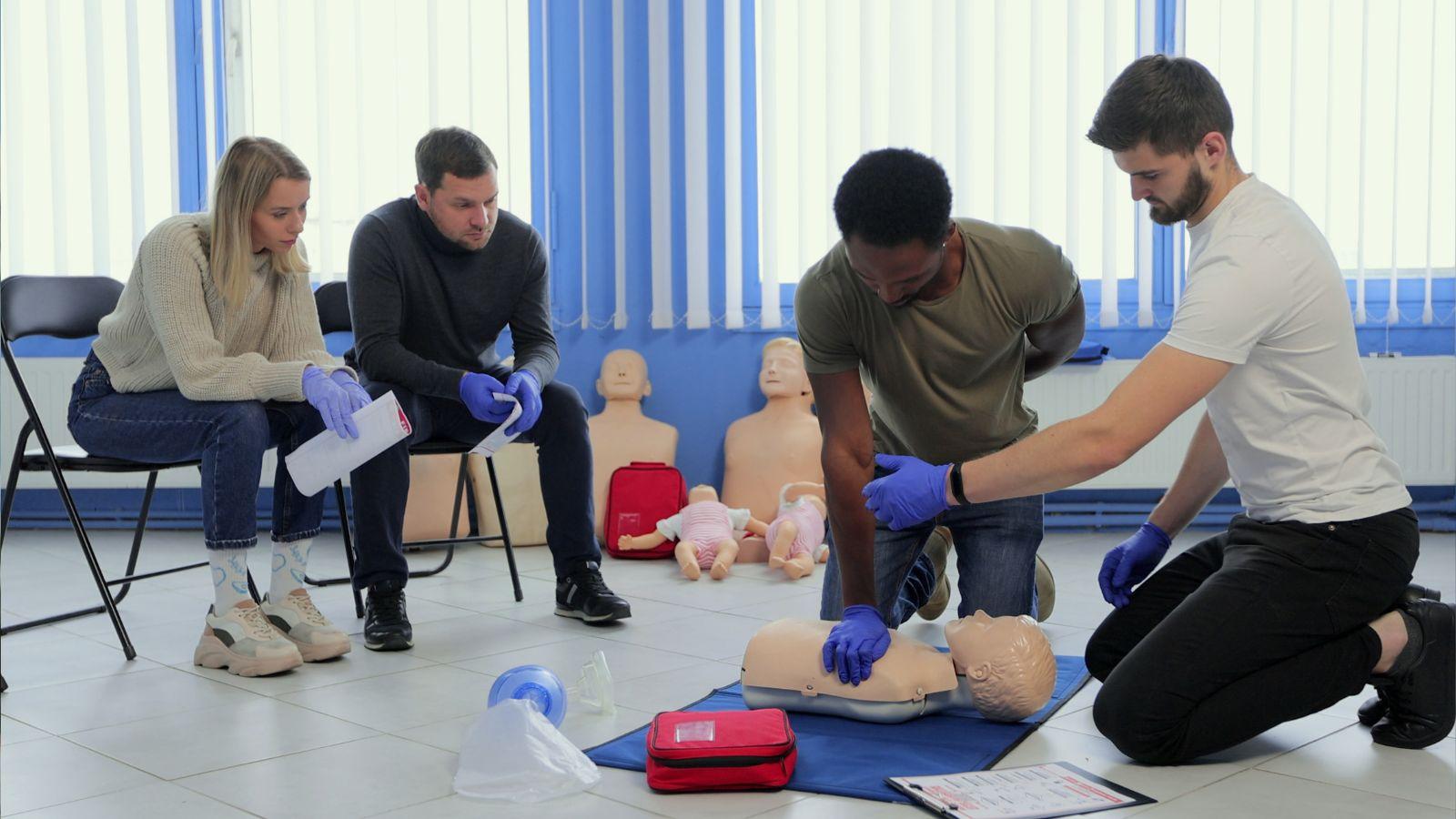
Standard first aid covers everyday injuries, but clinical environments and high-stress medical tech roles demand advanced life-saving skills. Discover why specialized CPR training is vital for healthcare providers, how it differs from basic bystander courses, and how modern blended learning makes certification highly convenient for busy professionals.
We have all sat through standard workplace safety videos. They show you where the fire exits are and briefly explain how to apply a basic bandage to a papercut. But what if you work in a clinical setting, a busy dental office, or alongside vulnerable patients?
When a real medical emergency strikes in these high-stakes environments, basic knowledge just won’t cut it. You need precise, clinical-level skills to keep a patient stable before paramedics take over. That is exactly why securing your HCP CPR certification is a completely different ballgame compared to regular weekend safety classes. It prepares you for the intense, fast-paced reality of professional healthcare emergencies.
What Makes Healthcare Provider CPR Different?
If you take a standard CPR class, you learn how to handle an emergency as a solo bystander. You learn how to push hard on the chest and call 911. But in a clinical environment, you rarely work alone.
Healthcare Provider training—often referred to today as Basic Life Support (BLS)—focuses heavily on team dynamics. You learn how to perform two-rescuer CPR, where one person handles chest compressions while the other manages the airway. You also get hands-on practice using specialized equipment like bag-valve masks (BVMs), which you simply won’t find in a standard office first aid kit.
Why Do Clinical Teams Need Synchronized Training?
During a cardiac event, chaos is your worst enemy. If a patient suddenly stops breathing in a clinic waiting room, the staff cannot afford to guess who is doing what.
Advanced training teaches you how to communicate effectively during a “code” situation. You learn how to seamlessly swap out compressor roles every two minutes without missing a beat, preventing physical exhaustion while maintaining high-quality blood flow to the patient’s brain. This synchronized teamwork drastically improves a patient’s chances of survival.
How Can Busy Professionals Fit Training Into Their Schedules?
Nurses, dental assistants, and medical tech workers already work exhausting hours. The thought of spending an entire weekend sitting in a classroom to renew a certification sounds awful. I totally get it.
Thankfully, the training industry has adapted. A Blended Learning format is a massive relief for busy schedules. You complete the in-depth theoretical modules online from your laptop, whenever you actually have free time. Once the digital portion is done, you just drop by a training center for a brief, highly focused skills session to practice on advanced mannequins.
If you are looking for first aid training near the Byward Market, the busy intersection of Rideau Street and King Edward Avenue, or other areas close to our facility, then you may reach out to Coast2Coast First Aid/CPR – Ottawa in that area. For more info and articles like this visit: https://www.c2cfirstaidaquatics.com/
Frequently Asked Questions
Is HCP training the same as Basic Life Support (BLS)? Yes, in most modern training contexts. The term HCP (Health Care Provider) is older, and major organizations like the Red Cross and Heart & Stroke have largely transitioned to calling this advanced level of training Basic Life Support (BLS).
Do I need to be a nurse or doctor to take this course? Not at all. While it is designed for healthcare professionals, anyone can take it. Dental hygienists, clinical tech workers, pharmacy staff, and even aspiring medical students frequently enroll to upgrade their skills.
What exactly is a bag-valve mask? A bag-valve mask (BVM) is a hand-held device used to provide positive pressure ventilation to a patient who is not breathing properly. It consists of a self-inflating bag and a face mask, and it is far more effective than basic mouth-to-mouth resuscitation.
How often do I need to renew my BLS/HCP certification? Because these are advanced clinical skills, certifications typically expire after just one year. Annual renewal ensures that your muscle memory remains sharp and that you are up to date on the latest medical guidelines.
Will this course teach me how to use an AED? Yes. You will learn how to operate an Automated External Defibrillator quickly and efficiently, including how to integrate AED shocks seamlessly into a high-performance, two-rescuer CPR routine.