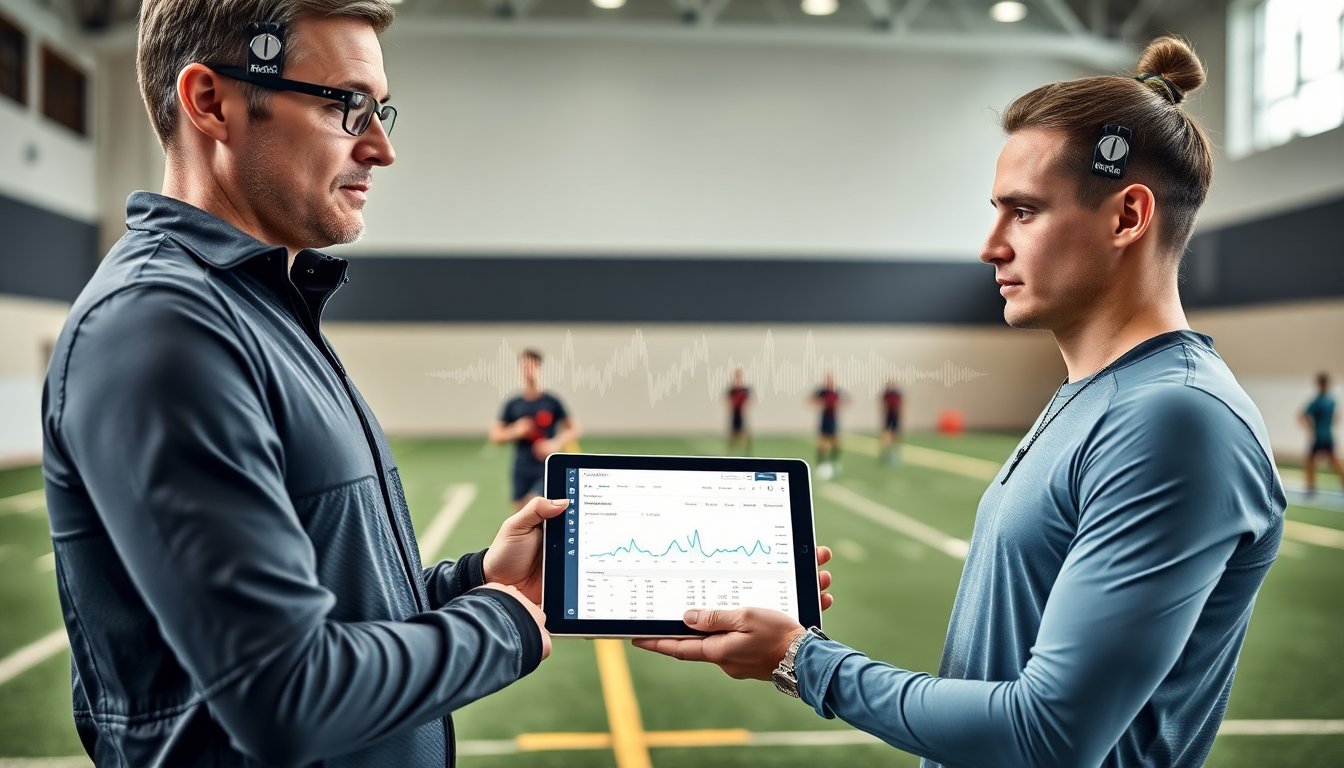
HarmoniCode Sports uses sound, sensors, and AI to improve athlete performance. The system captures audio and motion data. It converts that data into clear feedback for athletes and coaches. The approach aims to speed skill learning, cut injury risk, and measure progress. This article explains how HarmoniCode Sports works, where teams use it, and how coaches measure return on investment.
Key Takeaways
- HarmoniCode Sports leverages sound, sensors, and AI to provide real-time feedback that enhances athlete performance and reduces injury risk.
- The platform combines audio cues with biomechanics data to deliver objective, repeatable coaching insights trusted by teams and coaches.
- Key features include event detection, technique scoring, and trend analysis, helping to identify faults and track skill consistency over time.
- HarmoniCode Sports supports varied use cases like skill development, injury prevention, rehabilitation monitoring, and return-to-play standardization.
- Coaches can measure ROI through metrics such as reduced injury days and faster skill gains validated by HarmoniCode Sports’ analytics dashboards.
- Successful implementation requires careful baseline setup, sensor calibration, consistent drills, and phased rollout to maximize the system’s benefits.
What HarmoniCode Sports Is And Why It Matters
HarmoniCode Sport is a platform that links sound, sensor data, and machine learning. The platform records subtle audio cues from movement and ball contact. It pairs those cues with biomechanical data from accelerometers and gyroscopes. The system then labels events and predicts performance outcomes. Teams use HarmoniCode Sports to detect early fatigue, refine technique, and standardize coaching feedback. The platform matters because it provides objective, repeatable measures that coaches trust. It turns noisy practice sessions into clear, actionable insights.
Core Technology: Sensors, Audio Signals, And Machine Learning
HarmoniCode Sports collects synchronized audio and motion signals. Microphones capture impact sounds and ambient cues. Wearable sensors capture acceleration, orientation, and force estimates. The platform aligns these streams in time. It extracts features like contact duration, peak acceleration, and spectral energy. A machine learning pipeline classifies events and scores technique quality. Models run on cloud servers and at the edge to reduce latency. Engineers update models with labeled data from training sessions. The result is real-time feedback and post-session analytics that coaches can trust.
Key Features And How They Work
HarmoniCode Sports offers event detection, technique scoring, and trend analysis. Event detection flags every hit, step, or catch using audio peaks and sensor thresholds. Technique scoring compares each event to athlete baselines and expert templates. Trend analysis shows weekly changes in load, asymmetry, and skill consistency. The system delivers short audio clips and visual scores to the coach app. It also generates drill suggestions based on recurring errors. Coaches can export data to common formats for further study.
Practical Use Cases: From Skill Development To Injury Prevention
HarmoniCode Sports supports skill drills, match analysis, and load management. Coaches use it to isolate technique faults during live practice. Strength staff use it to track fatigue signatures that raise injury risk. Scouts use it to quantify skill consistency under pressure. Physical therapists use the system to monitor rehabilitation progress through sound and motion markers. Clubs apply HarmoniCode Sports to standardize return-to-play criteria. Each use case produces measurable actions that staff can follow.
Measuring Impact: Metrics, Analytics, And ROI For Coaches
HarmoniCode Sports reports event counts, technique scores, and load indices. The platform also shows asymmetry measures and contact variability. Coaches compare pre- and post-intervention metrics to judge progress. Analytics dashboards highlight players who need intervention and those ready for stepped training. Teams can calculate ROI by linking reduced injury days and faster skill gains to contract value. Early adopters report faster skill consolidation and fewer overuse injuries when they follow HarmoniCode Sports guidance.
Getting Started: Setup, Best Practices, And Common Pitfalls
Teams start by instrumenting a small group and running baseline sessions. HarmoniCode Sports recommends controlled drills to build labeled data. Coaches should calibrate sensors and verify audio quality before full rollouts. Best practices include consistent sensor placement and scheduled model retraining. Common pitfalls include poor microphone placement, inconsistent drills, and ignoring coach context when tuning models. Teams should plan a phased rollout, train staff on the app, and track simple metrics for the first eight weeks. That approach speeds reliable use and reduces wasted effort.