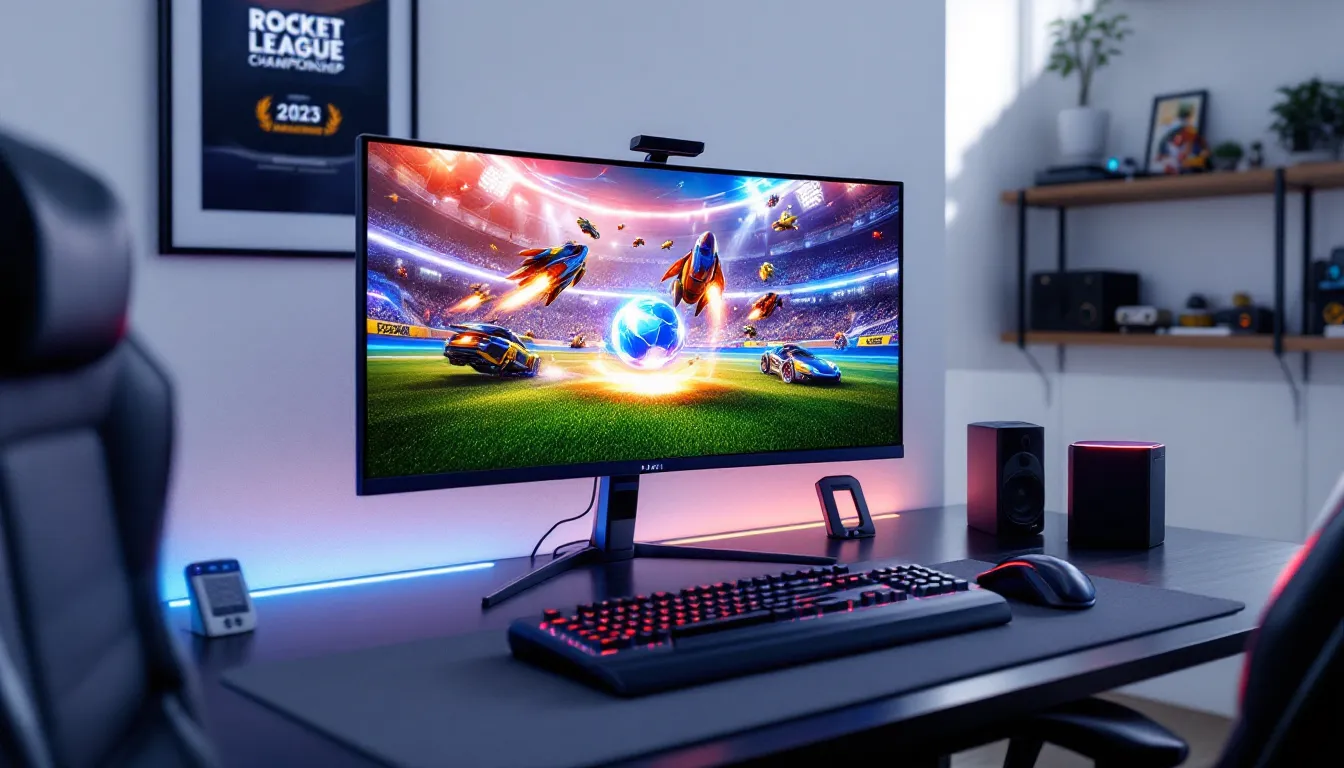
Rocket League didn’t just launch, it exploded. The game that turned soccer into a physics-defying aerial ballet with rocket-powered cars has become one of the most enduring multiplayer experiences of the past decade. But pinning down exactly when Rocket League came out requires more nuance than a single date. The game’s journey from a modest PS4/PC debut to a free-to-play juggernaut spans multiple platform releases, a predecessor game, and strategic shifts that redefined its audience.
If you’re here wondering when Rocket League was made or when it first hit your platform of choice, you’re in the right place. We’re breaking down every major release date, the original name that started it all, and how timing, combined with smart business decisions, turned a simple concept into a cultural icon that’s still growing in 2026.
Key Takeaways
- Rocket League officially launched on July 7, 2015, simultaneously on PlayStation 4 and PC, supported by a PlayStation Plus promotion that delivered over 5 million downloads in the first month.
- The free-to-play transition in September 2020 expanded the player base to over 150 million, transforming Rocket League from a paid title into a global phenomenon.
- Rocket League evolved from the 2008 predecessor Supersonic Acrobatic Rocket-Powered Battle-Cars, with Psyonix refining the physics, simplifying the name, and designing the game for cross-platform play and esports from the ground up.
- Strategic platform expansions—Xbox One (February 2016) and Nintendo Switch (November 2017)—combined with cross-platform infrastructure made Rocket League accessible across all major gaming devices.
- The game’s mid-2015 launch timing aligned perfectly with the rise of streaming culture, competitive gaming’s mainstream acceptance, and demand for accessible yet skill-based multiplayer experiences.
- Rocket League’s enduring success stems from continuous seasonal content, a thriving esports ecosystem (RLCS), and technical innovations that kept the game competitive and relevant for over a decade.
The Original Release: July 2015 on PlayStation 4 and PC
Rocket League officially launched on July 7, 2015, simultaneously releasing on PlayStation 4 and Windows PC via Steam. Developer Psyonix dropped the game into an already crowded summer release window, but they had an ace up their sleeve that most indie studios could only dream of.
The game was developed by Psyonix, a small studio based in San Diego that had been tinkering with the car-soccer concept since 2008. When Rocket League released in 2015, it carried years of iteration, refined physics, and lessons learned from their earlier attempt at the formula.
The PC version launched at $19.99, while PS4 players had immediate access through a PlayStation Plus promotion, a decision that would prove absolutely critical to the game’s meteoric rise.
Why the Release Date Mattered for Rocket League’s Success
July 2015 wasn’t just a random launch window. The mid-summer slot meant reduced competition from AAA blockbusters, which typically cluster around spring and fall releases. Gamers looking for something fresh between major releases found Rocket League waiting.
The timing also coincided with the PS4’s growing install base. Sony’s console was dominating the mid-2010s console wars, and Psyonix secured a platform that was hungry for distinctive multiplayer experiences. The PS4’s share features and built-in streaming capabilities meant highlight-reel aerial goals and clutch saves spread organically across social media.
But the real genius was in the simplicity. Rocket League’s core loop, hit ball with car, score goal, required zero tutorial for anyone who’d ever played soccer or seen a game of it. The skill ceiling, but, stretched into the stratosphere. This accessibility-meets-mastery design meant the July 2015 release captured both casual players and the competitive crowd from day one.
PlayStation Plus: The Game-Changing Launch Strategy
Psyonix made a deal with Sony that changed everything: Rocket League would be a PlayStation Plus free game for the entire month of July 2015. Every PS Plus subscriber got the full game at no additional cost.
This wasn’t just smart, it was borderline brilliant. The promotion gave Rocket League instant access to millions of potential players who’d already paid for their PS Plus subscription. There was zero barrier to trying it, and once players experienced that first aerial goal or game-winning save, they were hooked.
The PlayStation Plus promotion resulted in over 5 million downloads in the first month alone. Server infrastructure couldn’t keep up with demand, leading to connectivity issues in the early weeks, a problem Psyonix scrambled to fix. But those “server overload” headlines only reinforced the narrative: this game was so popular it broke its own servers.
PC players on Steam, meanwhile, gladly paid the $19.99 asking price after watching PS4 players flood Twitch and YouTube with wild gameplay clips. The cross-platform buzz created a feedback loop where each platform fueled interest on the other.
Rocket League’s Expansion to Xbox One and Nintendo Switch
Psyonix didn’t stop at PS4 and PC. The game’s explosive success demanded wider platform availability, and Xbox and Nintendo players wouldn’t wait long to get their hands on it.
Xbox One Release: February 2016
Rocket League hit Xbox One on February 17, 2016, roughly seven months after the original PS4/PC launch. The delay wasn’t arbitrary, Sony’s initial exclusivity deal kept the game off competing consoles through the crucial holiday 2015 window.
When it finally arrived on Xbox One, the game launched at $19.99 with all the content updates and improvements Psyonix had rolled out since July. Xbox players got the benefit of a more polished version, complete with additional cars, arenas, and the stability improvements that came from months of post-launch support.
Microsoft didn’t secure a Games with Gold promotion at launch like Sony did with PS Plus, but the game’s reputation preceded it. Xbox players had spent months watching friends on other platforms and were ready to jump in. The Xbox One release expanded the player pool significantly and set the stage for what would become one of gaming’s best cross-platform ecosystems.
Nintendo Switch Release: November 2017
Rocket League came to Nintendo Switch on November 14, 2017, bringing the full experience to a handheld-hybrid console for the first time. This was over two years after the original release, but the Switch’s unique form factor made the wait worthwhile.
The Switch version launched at $19.99 and included all the base game content plus several car packs. Performance targets were set at 60fps when docked and 60fps in handheld mode at lower resolutions, critical for a game where split-second timing determines outcomes.
What made the Switch release special was portability. Suddenly, players could practice air dribbles and flip resets on the bus, in bed, or anywhere the Switch traveled. The compromise was visual fidelity and slightly longer load times, but the core gameplay remained intact. Nintendo fans embraced it, and the Switch version became one of the console’s most-played online multiplayer titles.
The Road to Free-to-Play: September 2020’s Biggest Shift
Five years after launch, Rocket League made its boldest move yet. On September 23, 2020, Rocket League transitioned to a free-to-play model across all platforms. This wasn’t just a price drop, it was a complete restructuring of the game’s business model and distribution.
The shift removed the $19.99 price tag entirely, opening the floodgates to players who’d been sitting on the fence or couldn’t justify the purchase. Existing players who’d bought the game before the transition received “Legacy” status, which included exclusive cosmetic items, titles, and bonus credits as a thank-you.
What Changed When Rocket League Went Free-to-Play
The free-to-play conversion brought several major changes beyond just the price:
- Tournaments and Challenges System: A revamped progression system with free and premium reward tracks, similar to battle passes in Fortnite and Apex Legends.
- Item Shop: Cosmetic items moved to a rotating daily shop with transparent pricing instead of the previous loot crate system.
- Competitive Ranks: The ranking system was overhauled with the introduction of Season 1 (the first under the F2P model), resetting ranks and recalibrating matchmaking.
- Removal from Steam Store: New players could no longer purchase or download Rocket League through Steam, it moved exclusively to the Epic Games Store for new PC players. Existing Steam players kept their version and continued receiving updates.
The player count exploded. Psyonix reported that Rocket League saw over 1 million concurrent players within the first 24 hours of going free-to-play, with millions of new accounts created in the first week. The move successfully injected new life into a game that was already thriving.
Epic Games Acquisition and Its Impact
The free-to-play shift didn’t happen in a vacuum. Epic Games acquired Psyonix in May 2019, roughly 16 months before the F2P transition. The acquisition gave Psyonix the financial backing and technical infrastructure to make such a risky pivot.
Epic’s influence was immediately visible. The game migrated to Epic’s online services, cross-platform parties became seamless across all platforms, and the Epic Games Store became the mandatory launcher for new PC players. Some gaming industry news outlets speculated that the F2P model was Epic’s strategy to grow the player base ahead of deeper integration with Fortnite and other Epic properties.
The acquisition wasn’t without controversy. Steam players worried about losing access or being forced to migrate. Psyonix clarified that existing Steam versions would continue working indefinitely, but the split between legacy Steam users and new Epic Store players created a minor rift in the PC community.
The Legacy of Supersonic Acrobatic Rocket-Powered Battle-Cars
Before Rocket League dominated multiplayer gaming, there was Supersonic Acrobatic Rocket-Powered Battle-Cars, the PlayStation 3 exclusive that laid the groundwork. Released in October 2008 exclusively on PS3 via the PlayStation Network, it was Rocket League’s original name, or more accurately, its spiritual predecessor.
Supersonic Acrobatic Rocket-Powered Battle-Cars (often shortened to SARPBC by its small but devoted fanbase) introduced the core concept: rocket-powered cars playing soccer in an arena. The physics, the boost mechanics, the absurd aerial potential, it was all there in 2008.
But SARPBC didn’t find mainstream success. The convoluted name didn’t help, and the PS3-exclusive release limited its reach. It sold modestly and developed a cult following, particularly among competitive players who recognized the depth beneath the quirky exterior. The game’s online community remained active for years, with dedicated players pushing the skill ceiling and organizing tournaments.
How the 2008 Predecessor Shaped Rocket League
Psyonix took seven years of feedback, iteration, and competitive observation from SARPBC to craft Rocket League. The improvements were substantial:
- Simplified Name: “Rocket League” was infinitely more marketable and memorable than the original mouthful.
- Refined Physics: The car handling and ball physics were tightened, making the game feel more responsive and predictable at high levels of play.
- Visual Polish: Rocket League’s art direction was cleaner and more appealing, with better readability during chaotic moments.
- Cross-Platform Infrastructure: Unlike SARPBC’s PS3-only limitation, Rocket League launched with cross-platform play in mind.
- Spectator-Friendly Design: Camera angles, replay systems, and UI elements were optimized for streaming and esports, lessons learned from watching SARPBC’s competitive scene.
SARPBC veterans got a nod in Rocket League through legacy items and references. The Octane, Rocket League’s most popular car body, is a direct descendant of SARPBC’s default vehicle. Players who owned SARPBC received exclusive cosmetic items when linking their accounts to Rocket League, a small but appreciated gesture to the OG community.
When Rocket League was made, Psyonix essentially refined and perfected the formula they’d tested in 2008. SARPBC was the prototype: Rocket League was the final product.
Major Updates and Milestones Since Launch
Rocket League’s post-launch evolution has been relentless. Psyonix committed to continuous updates, seasonal content, and technical improvements that kept the game fresh for over a decade.
Competitive Scene and Esports Development
Rocket League Championship Series (RLCS) debuted in 2016, establishing a professional competitive ecosystem. The first season featured a $55,000 prize pool, modest by today’s standards, but significant for a year-old indie game.
By 2026, RLCS has grown into a multi-million dollar circuit with regional leagues across North America, Europe, South America, Oceania, Asia, and the Middle East. The Fall, Winter, and Spring Majors structure introduced in RLCS 2021-22 has become the standard, culminating in a World Championship each summer.
Major esports milestones include:
- RLCS Season 5 World Championship (2018): Prize pool hit $1 million for the first time.
- RLCS X (2020-21): Introduced regional formats and The Grid weekly competitions.
- RLCS 2022-23: Expanded to include more international regions, bringing truly global competition.
Professional players like Jstn., GarrettG, Squishy Muffinz, and Fairy Peak became household names within the gaming community. The competitive meta evolved from ground-based rotations to ceiling shots, flip resets, and team-coordinated air plays that seemed impossible in 2015.
Cross-Platform Play and Technical Innovations
Rocket League was an early champion of cross-platform play, but it didn’t launch with full functionality. PS4 and PC players could match together from day one, but Xbox One players were siloed due to platform politics.
Full cross-platform parties (PS4, Xbox One, Switch, and PC players in the same lobby) didn’t arrive until the Tournaments Update in April 2018. This was massive, friends could finally squad up regardless of platform. Epic’s acquisition further smoothed cross-platform infrastructure, and by 2020, cross-progression allowed players to link accounts and carry inventory, ranks, and Rocket Pass progress across platforms.
Other technical milestones:
- 120 FPS support on PS5 and Xbox Series X/S launched with next-gen console releases in late 2020.
- HDR and 4K resolution became standard on enhanced consoles.
- Latency improvements via server infrastructure upgrades reduced ping and improved competitive integrity.
These aren’t flashy features, but they matter. Rocket League is a game where milliseconds determine outcomes, and Psyonix’s commitment to performance kept it competitive as a modern esport.
Content Drops, Seasons, and Collaborations
Rocket League’s content cadence has been aggressive since launch. Major collaborations brought branded cars and cosmetics from pop culture franchises:
- Batmobile (from both Batman v Superman and The Dark Knight versions)
- Fast & Furious car packs
- Ghostbusters Ecto-1
- Jurassic Park Jeep
- Formula 1 and NASCAR licensed vehicles
These weren’t just skins, cars like the Batmobile had unique hitboxes and handling characteristics (though Psyonix later standardized hitboxes to maintain competitive balance). Many competitive gaming guides have covered how car hitbox types (Octane, Dominus, Plank, Hybrid, Breakout) affect playstyle at high ranks.
Seasonal content evolved from simple crate drops to the Rocket Pass system introduced in 2018. Each season brings a new Rocket Pass with 70+ tiers of cosmetics, goal explosions, and car bodies. Free and premium tracks ensure everyone gets something, while paying players unlock the full suite.
Limited-time modes like Heatseeker, Spike Rush, and Dropshot rotate in and out, keeping casual playlists fresh. Haunted Hallows, Frosty Fest, and Spring Fever events deliver themed items and challenges annually.
Why Rocket League’s Release Timing Made It a Cultural Icon
Rocket League didn’t just succeed because it was a good game, it succeeded because it launched at the exact cultural moment when everything aligned.
The mid-2010s marked a shift in gaming consumption habits. Twitch and YouTube Gaming were exploding, and viewers craved spectator-friendly games with highlight-reel moments. Rocket League delivered: every match produced clips worth sharing. A last-second aerial goal or a perfectly timed demolition made for instantly viral content.
The July 2015 release also hit during the golden age of couch co-op and party games making a comeback. Games like Gang Beasts and Overcooked proved that local multiplayer wasn’t dead, and Rocket League’s split-screen modes on console made it perfect for living room sessions. It bridged the gap between competitive online gaming and casual social play.
Cross-platform infrastructure arrived just as platform tribalism was becoming tiresome. Gamers were tired of being unable to play with friends because someone owned a different console. Rocket League’s early cross-play support felt progressive and player-first in an industry still bickering over exclusivity deals.
The game’s skill ceiling also aligned perfectly with the rise of competitive gaming as mainstream entertainment. Traditional sports audiences were beginning to take esports seriously, and Rocket League’s literal sports aesthetic (it’s soccer, after all) made it an accessible entry point. Parents could understand what was happening on screen even if they’d never touched a controller.
Many video game news sources have cited Rocket League as a case study in how indie games can achieve AAA-level cultural penetration through smart positioning and community engagement. Psyonix didn’t just release a game, they released it at the moment gaming culture was ready to embrace exactly what Rocket League offered.
The Player Base Growth: From Launch to 2026
Rocket League’s player count trajectory tells the story of sustained success across multiple eras.
July 2015: Over 5 million downloads in the first month (primarily PS4 via PS Plus). Psyonix scrambled to add server capacity as concurrent player counts overwhelmed initial infrastructure.
End of 2015: 12 million players across PS4 and PC. The game dominated gaming awards season, winning multiple Game of the Year honors from various outlets.
2016-2017: Xbox One and Switch releases pushed total player count past 40 million by mid-2017. Cross-platform play expanded the effective player pool, reducing matchmaking times and improving competitive balance.
2018-2019: The 50 million player mark was passed, with steady growth fueled by esports viewership and content creator exposure. Major streamers like Rizzo, Lethamyr, and SunlessKhan built audiences around Rocket League content, funneling new players into the game.
September 2020: Free-to-play transition. Player count exploded to over 1 million concurrent within 24 hours. Within months, Psyonix announced Rocket League had surpassed 80 million players.
2021-2023: The F2P model sustained momentum. By late 2023, total player count exceeded 150 million, with the game consistently ranking among the top 10 most-played titles on Steam and maintaining strong console populations.
2026: As of March 2026, Rocket League remains a top-tier competitive title with an active player base estimated around 10-15 million monthly active users across all platforms. Daily concurrent peaks still regularly exceed 500,000 during prime hours. The game’s longevity is rare, most multiplayer games see sharp declines after 2-3 years, but Rocket League has maintained relevance for over a decade.
The combination of F2P accessibility, cross-platform support, continuous content updates, and a thriving competitive scene has given Rocket League staying power that few games achieve. It’s outlived countless “Rocket League killers” and remains the definitive car-soccer experience.
Conclusion
When Rocket League came out on July 7, 2015, Psyonix couldn’t have predicted the phenomenon they’d created. From a modest PS4 and PC launch backed by a PlayStation Plus promotion to a free-to-play juggernaut with over 150 million players, the game’s journey reflects smart design, strategic business decisions, and perfect cultural timing.
The original name, Supersonic Acrobatic Rocket-Powered Battle-Cars, might’ve been a mouthful, but it paved the way for Rocket League’s refined formula. When Rocket League was made, Psyonix took seven years of lessons from their 2008 predecessor and delivered a game that was immediately accessible yet endlessly deep.
From the Xbox One release in February 2016 to the Switch launch in November 2017, and finally the free-to-play shift in September 2020, each milestone expanded Rocket League’s reach. The game’s release timing coincided with the rise of streaming culture, cross-platform demand, and competitive gaming’s mainstream acceptance.
Eleven years later in 2026, Rocket League isn’t just alive, it’s thriving. The competitive scene continues to grow, content updates keep the gameplay fresh, and new players discover the magic of their first aerial goal every day. That’s the legacy of a game that launched at exactly the right moment and never stopped evolving.