
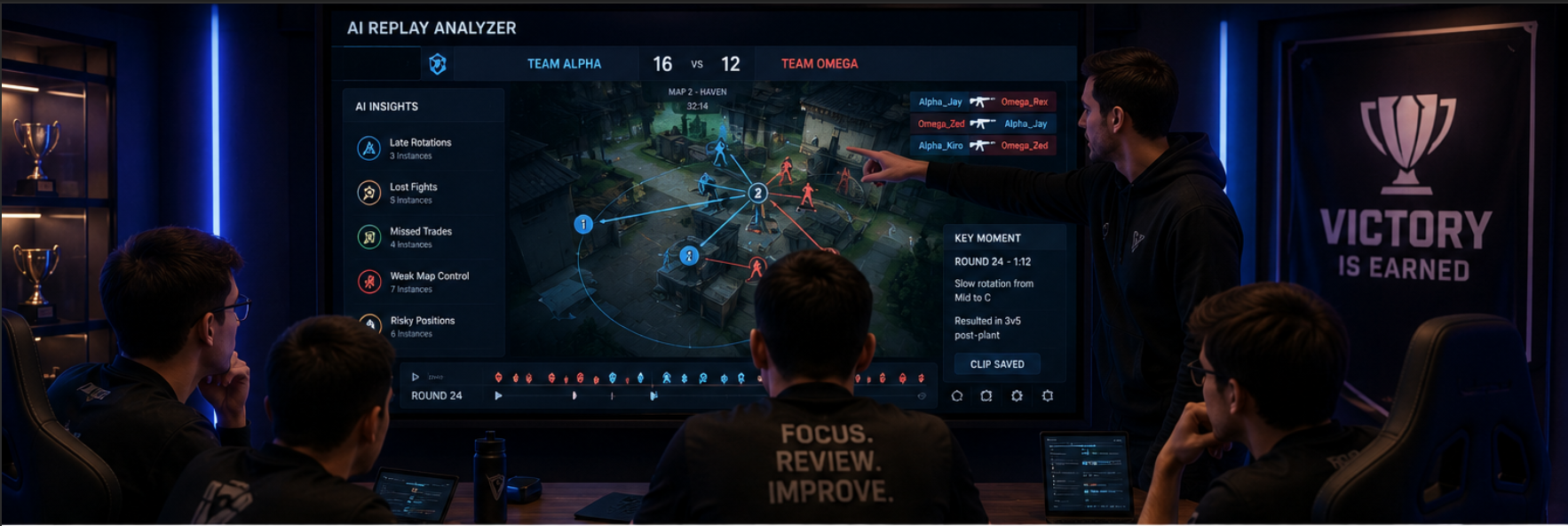
A replay room used to mean tired players sitting with a coach after a long match, watching the same mistakes again. Someone would pause the screen, point at a bad move, and ask why it happened. That still matters, but esports is changing fast. AI now helps teams see patterns that a human eye may miss. It can mark late rotations, weak map control, and moments where a team lost trust in its plan. Done well, it gives players a clearer way to grow without turning practice into blame.
Replays now speak faster
Old replay reviews could take a long time. A coach might spend hours cutting clips before players even sit down. By then, the match may already feel old. AI can speed up that first stage by sorting the game into useful parts. It can flag lost fights, missed trades, slow calls, and risky positions.
This helps a team spend less time searching and more time talking. The coach still leads the room, but the tool gives the meeting a cleaner start. Players can see the moment, pause it, and talk through it while it still feels fresh.
Mistakes become easier to name
A bad round can feel messy when everyone is tired. One player may think the entry was late. Another may blame the support call. Someone else may feel the team lost because of aim alone. AI helps by breaking the round into small parts.
It can show who moved first, who reacted late, and where space was lost. This does not mean the tool is always right. It gives the team a base for honest talk. “We panicked” is vague. “We used two tools too early and had nothing left for the retake” is something the team can fix.
Smarter reads beyond the scoreboard
Scoreboards can be loud but shallow. A player may finish with strong numbers and still miss the team plan. Another may have a quiet score but do hidden work. AI replay rooms help teams see those small parts of a match that simple stats do not show.
This also changes how fans follow esports. A careful viewer checking an online sportsbook may look at form, maps, and team style before making a small matchday choice. Still, that choice should stay light and measured. Small wagers work best as sustainable entertainment, not as pressure. The smarter fan reads the match with care.
Personal drills after the review
The best part of an AI replay room may come after the team meeting. Once the errors are clear, the next step is practice. A support player may need better timing. A sniper may need cleaner angles. A leader may need calmer calls.
AI can turn those needs into drills. Each player gets work that fits their role, not just a general practice list. This makes training feel fairer. A player is not told to “play better” and left confused. They are shown what to repeat and what to avoid.
Coaches still carry the human touch
AI can count, mark, and compare, but it cannot fully know a player’s mood. It may not know who is tired, who is scared to speak, or who needs praise before correction. That is why the coach still matters.
A good coach uses AI as a helper, not a boss. The tool brings the clips. The coach reads the room. Together, they can make review sessions calmer. Mistakes become part of the work, not a reason to shame anyone.
Team trust grows from clear feedback
A strong replay room should not make players feel small. It should help them see the game with less fear and more honesty. When AI points out a repeated error, the team can talk about the pattern instead of blaming one person for one bad moment.
This kind of feedback can build trust over time. Players know the review is based on clear clips, not mood or anger. It also helps quieter players speak up because the facts are already on the screen. The room becomes less about who shouted first and more about what the team can fix before the next match.
Esports teams do not only need faster tools. They need better ways to talk after losing. AI replay rooms can help with that by turning heated feelings into clear lessons. Players can face errors without feeling attacked.
Smarter teams will not be the ones that let machines replace people. They will be the teams that use AI to see better, train better, and speak to each other with more care.

