Rocket League Season 11 dropped with a wave of changes that shook up how players approach both casual matches and ranked grind. From a fresh visual identity to tweaks in the competitive ecosystem, this update brought more than just a new Rocket Pass, it reshaped the meta, adjusted hitboxes, and introduced events that kept the community buzzing through its entire run.
Whether you’re chasing that next rank or just hunting down exclusive cosmetics, Season 11 packed enough content to keep even veteran players engaged. Understanding what changed, what stayed the same, and how to leverage the new systems can make the difference between spinning your wheels and actually climbing the ladder. Here’s the full breakdown of everything that made Season 11 one of the most talked-about updates in Rocket League’s history.
Key Takeaways
- Rocket League Season 11 introduced a cyberpunk-inspired visual overhaul with a new arena (Neon Fields), refined Rocket Pass rewards structure, and competitive ranking adjustments that compressed Diamond and Champion tiers.
- The Rocket Pass delivered 70 base tiers with front-loaded desirable items, exclusive Battle Cars (R3MX with Octane hitbox and Tyranno with Merc hitbox), and 1,000 Credits back at Tier 110 for Premium owners.
- Competitive ranking received a soft MMR reset with tighter skill distribution—Diamond 3 became significantly harder to break through, requiring improved game sense and positioning alongside mechanical skills.
- Minor hitbox adjustments to Dominus and Plank cars, physics engine refinements for ball consistency, and demolition hit detection improvements at supersonic speeds made ranked play more fair and consistent.
- Tournament Mode expanded with GC-exclusive cups and All-Star tournament series offering exclusive cosmetics like Wrathogen Goal Explosion and Polyergic Inverted Wheels as status symbols.
- The revamped challenge system eliminated FOMO through challenge stacking, RLCS esports integration drove in-game rewards and exclusive team-themed cosmetics, and positioning-focused training became essential for ranking up in the compressed competitive landscape.
What’s New in Rocket League Season 11?
Season 11 arrived with a clear identity shift that players noticed the moment they booted up the game. Psyonix leaned hard into a futuristic, neon-soaked aesthetic that contrasted sharply with the grittier vibe of previous seasons. This wasn’t just a cosmetic refresh, the entire UI got polished, menus felt snappier, and even the post-match celebration sequences received new animations.
The update also introduced quality-of-life improvements that streamlined playlist navigation and made tournament registration less clunky. But beyond the surface-level polish, the real meat of Season 11 came from how it altered core gameplay spaces and competitive flow.
Season 11 Theme and Visual Overhaul
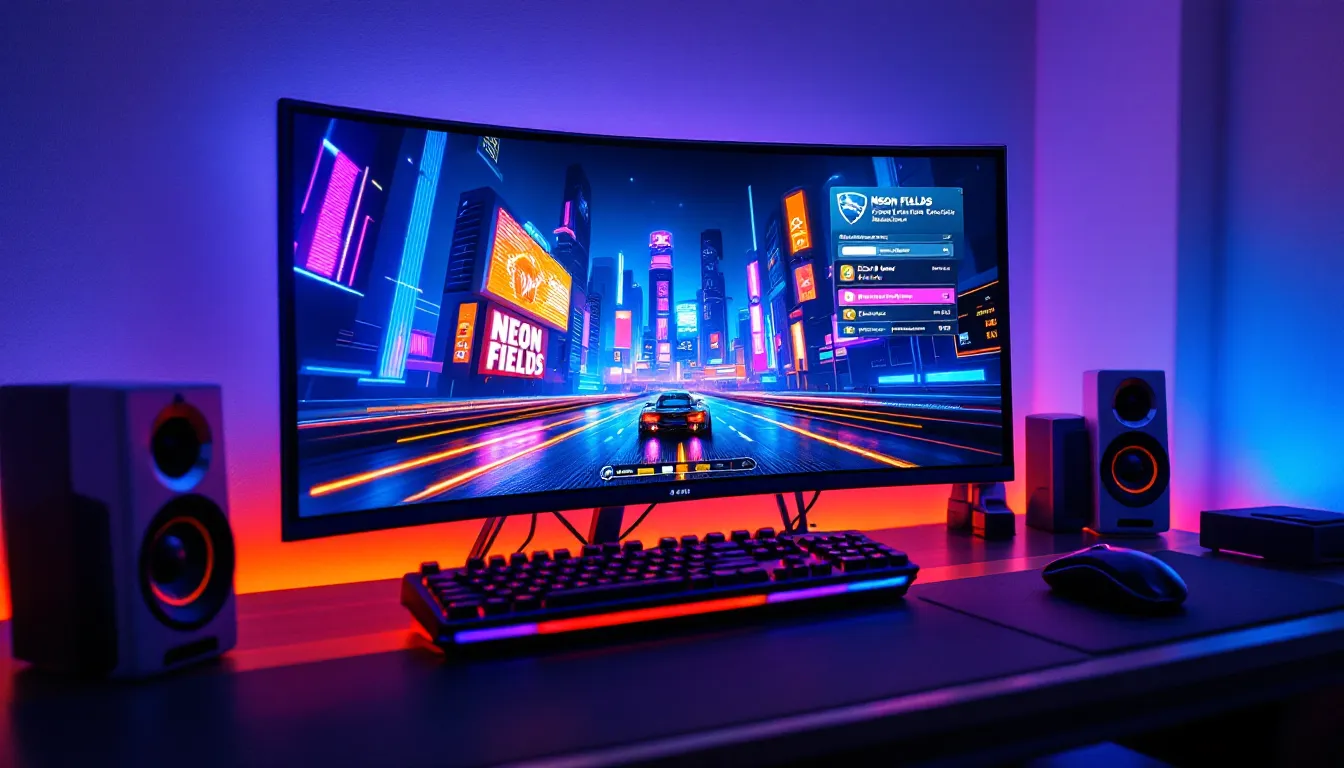
The Season 11 theme embraced a cyberpunk-inspired visual language with heavy use of electric blues, purples, and vibrant oranges. Loading screens, menu backgrounds, and even goal explosions reflected this shift. The Rocket Pass rewards doubled down on this aesthetic, most of the featured items came with animated decals that pulsed with neon energy.
Player banners, titles, and profile customization options all followed suit. If you weren’t into the flashy, high-tech look, you might’ve felt Season 11’s cosmetics weren’t for you. But for fans of synthwave and cyberpunk culture, this season delivered hard.
The visual overhaul extended to the UI redesign as well. Psyonix smoothed out menu transitions, made button prompts more intuitive across platforms (PC, PS4, PS5, Xbox One, Xbox Series X
|
S, and Switch), and improved readability on smaller screens, a welcome change for handheld Switch players.
New Arena and Map Changes
Season 11 introduced Neon Fields, a brand-new arena that became an instant talking point. Set in a futuristic stadium surrounded by glowing skyscrapers and digital billboards, Neon Fields wasn’t just eye candy, it featured subtle lighting changes that some players claimed affected their ability to track the ball in certain camera angles.
The arena followed standard dimensions, so competitive integrity stayed intact. But the visual noise divided the community. Some loved the immersive vibe: others immediately toggled performance settings to minimize distractions.
Psyonix also rotated older maps back into casual and ranked playlists with minor adjustments. DFH Stadium and Mannfield received lighting tweaks to align with Season 11’s aesthetic, though these changes were purely cosmetic and didn’t impact gameplay.
Rocket Pass 11: Rewards, Tiers, and Exclusive Items
Rocket Pass 11 followed the established formula but refined reward pacing based on community feedback from Season 10. The pass included 70 base tiers plus unlimited Painted and Certified item drops beyond Tier 70 for Premium owners. Free-to-play users still got a decent haul, but the Premium track is where the real value lived.
Psyonix front-loaded more desirable items in the first 30 tiers this time around, which kept engagement higher early in the season. By Tier 70, Premium owners had access to two exclusive Battle Cars, multiple goal explosions, wheel sets, and a full suite of decals and toppers.
Free Track vs. Premium Track Breakdown
The Free Track offered 26 items total, including:
- 3 Decals (Universal and car-specific)
- 2 Wheel sets
- 1 Rocket Boost
- 1 Topper
- Credits and XP boosts scattered across tiers
- Player banners and titles for cosmetic variety
It’s enough to keep casual players engaged without feeling completely locked out, but the drop-off in quality compared to Premium is noticeable.
The Premium Track (1,000 Credits, roughly $9.99) unlocked:
- 2 Exclusive Battle Cars: R3MX (primary featured car) and Tyranno (secondary)
- 70+ items including Painted variants of wheels, boosts, and decals
- Keys to Golden Gifts (special crates with legacy items)
- 1,000 Credits back if you hit Tier 110, effectively making the pass free if you grind
- XP boosts that stacked with active events
The math worked out favorably for active players. If you logged in three times a week and completed challenges, you’d hit Tier 70 with about a month to spare. Many competitive grinders cleared Tier 200+ before the season ended.
Featured Battle Cars and Customization Options
The R3MX became the headline car for Season 11, and it shipped with the Octane hitbox, a smart move by Psyonix since most of the competitive community refuses to touch anything else. The car’s angular, mech-inspired design leaned into the cyberpunk theme hard, and its animated decals looked particularly sharp in post-goal replays.
The Tyranno, unlocked at Tier 40, used the Merc hitbox. It appealed to a niche crowd but didn’t see much play in ranked. Still, its dinosaur-meets-machine aesthetic made it a fun casual pick.
Beyond the Battle Cars, Season 11’s customization options included:
- Wheels: HRB-1, Parabolic, and Polyergic (with Painted variants)
- Rocket Boosts: Monsoon and Warp Wave
- Goal Explosions: Light Show (extremely popular) and Riser
- Decals: Over a dozen, including several animated options
Painted variants dropped randomly after Tier 70, and the RNG could be brutal. Some players pulled Titanium White R3MX decals within 10 tiers past 70: others ground to Tier 300 without seeing the color they wanted.
Competitive Ranking System Updates
Season 11 brought a soft MMR reset, which meant everyone played placement matches again, but your previous season’s rank heavily influenced where you landed. Psyonix tweaked the system to reduce the chaos that plagued early-season ranked matches in previous updates, and the result was a noticeably smoother placement experience.
The rank distribution also saw adjustments aimed at decompressing the middle tiers and making higher ranks feel more exclusive. This had real consequences for players camping in Diamond and Champ.
Rank Distribution Changes for Season 11
Psyonix published updated rank distribution percentages midway through Season 11, and the data showed a clear shift:
- Bronze and Silver: Slight decrease (combined ~15% of the player base, down from ~18%)
- Gold and Platinum: Increased density (~40% combined, up from ~37%)
- Diamond: Compressed (~25%, down from ~28%)
- Champion: Slight increase in the lower Champion ranks but harder to maintain (~12%)
- Grand Champion and Supersonic Legend: Remained exclusive (~3% combined)
The biggest takeaway? Diamond 3 became a significantly tougher barrier to break through. Players who comfortably sat in Champ 1 during Season 10 found themselves grinding harder to maintain that rank in Season 11. The MMR thresholds shifted upward by approximately 20-30 points per rank in Diamond and above.
For competitive players targeting top-tier esports performance, this meant the skill gap between Diamond 3 and Champ 1 widened noticeably. You couldn’t rely on mechanics alone anymore, game sense and positioning became the differentiators.
How MMR Adjustments Affect Your Placement
The soft reset worked like this: your Season 10 MMR got squished toward the median, then your placement matches determined how much you climbed or fell from that adjusted baseline. If you ended Season 10 at 1200 MMR (Champ 1), the reset might’ve put you around 1100 MMR. Winning 8 out of 10 placements could push you back to 1180-1200, while going 5-5 might land you at 1050-1100.
The system also placed more weight on match performance during placements. Players who dropped 4-5 goals and assists in wins saw bigger MMR gains than those who scraped by with minimal contributions. This performance-based adjustment wasn’t explicitly confirmed by Psyonix, but community data miners and players tracking their own MMR swings noticed the pattern.
One controversial change: placement match loss forgiveness was removed. In Season 10, losing your first two placements didn’t tank your MMR as hard. In Season 11, every match counted equally, which led to some frustrating early-season experiences for players stuck with AFKs or leavers.
Limited-Time Modes and Special Events
Season 11 cycled through several Limited-Time Modes (LTMs) that kept the casual playlist fresh. Psyonix brought back community favorites and introduced one new mode that sparked debate about whether it should become permanent.
Heatseeker returned for a two-week run early in the season. The mode, where the ball auto-curves toward the goal after each touch, remained a chaotic crowd-pleaser. It’s low-skill-floor, high-ceiling fun, new players could score highlight-reel goals, while veterans practiced redirect reads and last-second saves.
Spike Rush also made a comeback, and the mode’s emphasis on demolitions and aggressive positioning made it a training ground for boost management and shadowing. Competitive players sometimes used Spike Rush to warm up reflexes before ranked sessions.
The new mode, Gridiron 2.0, revamped the football-inspired LTM from earlier seasons. Players carried the ball instead of hitting it, and touchdowns replaced goals. The mode split opinions, some loved the change of pace, others felt it strayed too far from Rocket League’s core identity. It ran for three weeks and didn’t return after that.
Special events included:
- Spring Loaded Event (mid-season): Offered exclusive toppers, antennas, and a limited Golden Gift series
- Llama-Rama Crossover (Fortnite collab): Players earned Fortnite-themed items by completing challenges
- Championship Series Tie-In Drops: Watching official RLCS streams granted random drops, including team decals and wheels
The Spring Loaded Event gave players extra Golden Gifts that contained items from older crate series, a smart move that let newer players access legacy items without diving into the trading economy.
Gameplay Mechanics and Balance Changes
Season 11 didn’t overhaul core mechanics, but the changes Psyonix did carry out had ripple effects across competitive play. These updates targeted consistency and fairness, addressing edge cases that had frustrated high-level players for seasons.
Car Hitbox Adjustments
Psyonix made minor tweaks to three hitbox types:
- Octane: No changes (still the gold standard)
- Dominus: Adjusted the front-end elevation by 0.5 units, which slightly improved flick consistency
- Plank (Batmobile, Mantis, etc.): Widened by 1 unit to better match visual models
The Dominus change was subtle but meaningful for players who relied on that car for flip resets and ground dribbles. The adjustment reduced instances where the ball would clip through the nose during fast flicks, a frustration that had been documented since Season 8.
The Plank hitbox adjustment didn’t shift its competitive viability much. It remained a niche pick for players who valued its low profile for air dribbles and power shots. Still, pros using the Batmobile appreciated the improved accuracy when challenging 50/50s.
Physics Engine Tweaks and Ball Behavior
Psyonix rolled out a physics engine micro-patch three weeks into Season 11 after reports surfaced about inconsistent bounce behavior on certain surfaces. The issue primarily affected corner bounces on maps like Farmstead and Aquadome, where the ball would occasionally deadbounce unpredictably.
The patch normalized bounce angles and reduced RNG in high-speed collisions. Competitive players noticed tighter ball control during dribbles, and ceiling shot setups became slightly more consistent.
Another change: demolition hitboxes were refined to reduce phantom demos and missed bumps at supersonic speed. The system now calculated collision detection at a higher tick rate, which meant fewer instances of driving straight through an opponent without registering contact. This improvement mattered most in 3v3 where demo plays can swing entire possessions.
One unintended side effect of the physics tweak: wall-to-air dribbles became marginally easier because the ball stuck to the car slightly longer during wall rides. This wasn’t a massive buff, but players grinding mechanics in Freeplay noticed the difference immediately. Some pro players documented the changes in their training routines, adjusting drills to account for the tighter ball control.
New Challenges, Tournaments, and Progression Systems
Season 11 revamped the challenge system to reduce FOMO and make weekly objectives less grindy. Psyonix also expanded tournament rewards and introduced a new progression track for players who maxed out Rocket Pass.
Weekly and Seasonal Challenges
The challenge overhaul split tasks into three categories:
- Daily Challenges: Simple objectives like “Play 3 online matches” or “Score 5 goals.” These refreshed every 24 hours and granted 2,500 XP each.
- Weekly Challenges: More involved tasks such as “Win 10 matches in competitive playlists” or “Earn 50 assists.” These awarded 10,000-15,000 XP and stacked up to three weeks, so missing a week didn’t lock you out of rewards.
- Seasonal Challenges: Long-term objectives like “Reach Champion rank” or “Complete 100 tournaments.” These granted cosmetic items and titles exclusive to Season 11.
The key improvement: challenge stacking. If you couldn’t play for two weeks, your Weekly Challenges would accumulate rather than expire. This change respected players’ time and reduced the pressure to log in daily.
Seasonal Challenges included some grindy objectives (“Play 500 online matches” felt excessive), but the exclusive Supersonic Legend title variants and animated banners made them worth chasing for completionists.
Tournament Mode Enhancements
Psyonix expanded Tournament Mode rewards and added new cups at higher skill brackets. Tournaments still ran every hour on the hour across multiple regions (NA, EU, OCE, SAM, ASIA, ME), but Season 11 introduced:
- Diamond, Champion, and GC-specific tournament cups: Previously, tournaments capped at Champion-level entry. Season 11 added exclusive GC and SSL tournaments with significantly better rewards.
- Improved matchmaking: Reduced instances of unbalanced teams stomping through early rounds.
- All-Star Cup series: Weekly high-stakes tournaments with larger Credit payouts and rare cosmetic drops.
The All-Star Cups became especially popular. Winning one granted 20,000 Tournament Credits (enough to open multiple Tournament reward cups) plus a unique title. These ran Saturday and Sunday evenings, and competition was fierce, expect SSL smurfs and coordinated teams farming wins.
Tournament Credits could be spent on Tournament Cups that contained exclusive items not available through Rocket Pass or the Item Shop. Season 11’s Tournament Cup items included the Wrathogen Goal Explosion and Polyergic Inverted Wheels, both of which became instant status symbols.
Esports Integration and Championship Series Tie-Ins
Season 11 ran concurrently with the RLCS X Spring Split, and Psyonix leaned into the synergy between competitive play and in-game content. Esports fans got exclusive drops, team bundles, and broadcast integration that made watching tournaments more rewarding.
The Fan Rewards program expanded significantly. By linking your platform account to a Twitch account and watching official RLCS broadcasts, you earned randomized drops every 2-3 hours of watch time. Season 11 drops included:
- Team-branded decals for all RLCS X teams
- Emerald Pro Wheels (rare drop, <1% chance)
- Statesman and Crown avatar borders
- RLCS X Banners with animated team logos
These drops fueled a secondary economy. Titanium White Emerald Pro Wheels became one of the most sought-after items in the game, with traders offering tens of thousands of credits for a single pair.
Psyonix also introduced Esports Shop Team Bundles that rotated weekly. Each bundle included a full car preset (decal, wheels, boost, topper, antenna) themed around an RLCS team. Bundles cost 1,000-1,500 Credits, and proceeds partially funded the competitive prize pool.
One of the smarter integrations: in-game notifications for live RLCS matches. When a broadcast went live, players got an alert in the main menu with a direct link to the stream. This feature boosted viewership and made the esports scene feel more connected to the game itself. Coverage on major esports outlets highlighted how Rocket League continued setting the standard for in-game esports integration.
Season 11 also featured RLCS team challenges, where completing specific objectives unlocked team-themed cosmetics. For example, completing the “G2 Esports Challenge” (win 15 matches while using a G2 decal) granted an exclusive G2 title and player anthem. These challenges ran for two weeks each and cycled through all participating RLCS teams.
Top Strategies and Tips to Dominate Season 11
Season 11’s meta didn’t shift radically, but the small adjustments to hitboxes, MMR distribution, and tournament structures meant players needed to refine their approach to rank up efficiently. Whether you were grinding ranked or just hunting Rocket Pass rewards, these strategies made the difference.
Best Cars and Builds for the Current Meta
The Octane remained the undisputed meta pick. Its hitbox forgiveness, balanced dimensions, and familiarity made it the default choice for 70%+ of the ranked player base. The Dominus adjustments made it slightly more appealing, but most pros and high-level players stuck with what worked.
For players experimenting beyond the Octane:
- Dominus: Best for players who favor ground-based flicks and power shots. The longer hitbox improved 50/50 consistency.
- Fennec: Functionally identical to the Octane but with a visual model that matches the hitbox more closely. Some players found it easier to judge touches.
- Batmobile/Plank: Niche pick for freestyle specialists and players who excel at air dribbles. The widened hitbox made it marginally more forgiving.
Recommended builds for ranked grind:
- Car: Octane or Fennec
- Wheels: Whatever you like, no performance difference, but clean designs reduce visual clutter
- Boost: Standard Yellow or Alpha Boost (Goldstone equivalent). Both have minimal visual noise and clear audio cues
- Decal: Minimal animated decals or solid colors. Less distraction = better focus
Avoid flashy goal explosions in ranked. They extend replay time and can tilt teammates after conceding.
Ranking Up Faster: Training and Positioning Tips
Season 11’s compressed Diamond and Champion ranks meant you couldn’t rely on mechanical outplays alone. Game sense and positioning became the primary factors separating Diamond 3 from Champ 2.
Training priorities by rank:
- Gold-Platinum: Master basic aerials, power shots, and fast kickoffs. Spend 15 minutes daily in Freeplay working on recoveries and boost management.
- Diamond: Focus on off-ball positioning. Learn rotation patterns (standard 3v3 rotation, 2v3 defensive setups). Drill wall shots and backboard reads.
- Champion: Refine air roll control, half-flips, and shadow defense. Study pro replays to understand pressure application and when to challenge vs. shadow.
- GC+: Optimize speed. Every touch should either advance pressure or deny opponent momentum. Incorporate flip resets, ceiling shots, and advanced passing plays.
Positioning tips that matter:
- Third man stays back: In 3v3, the last defender should hover near mid-boost or back post. Don’t chase the play.
- Rotate far post: When rotating back on defense, arc wide to the far post rather than cutting through the middle. This prevents bumps and gives you better angles.
- Challenge early in neutral: Don’t give opponents free space to set up plays. Apply pressure before they gain momentum.
- Starve boost: Deny opponent big boosts whenever safe. A boost-starved opponent can’t challenge effectively.
- Fake challenge: At higher ranks, occasionally fake a challenge to bait a 50/50 or early touch. This disrupts opponent rhythm.
Custom training packs for Season 11:
- Ground Shots: 8D28-5A73-8B48-2F10 (builds consistency)
- Backboard Defense: 3BE6-FE89-4EBF-4B93-A18D (essential for Champion+)
- Air Dribbles: 28FB-3DF7-3B4D-71D6 (improves car control)
Grinding ranked efficiently also meant managing mental stamina. Play ranked in 3-5 match sessions, take breaks after losses, and avoid tilting into loss streaks. If you drop two ranks in a sitting, log off.
Conclusion
Season 11 delivered more than a fresh coat of paint, it refined systems that needed attention and gave both casual and competitive players reasons to stay engaged. The Rocket Pass offered solid value, the competitive adjustments rewarded smarter play, and the esports integration kept the connection between ranked grind and professional play stronger than ever.
Whether you walked away with a new title, climbed a rank, or just stacked cosmetics, Season 11 respected the time players put in. The meta didn’t flip overnight, but the small tweaks to hitboxes, MMR, and tournaments added up to a season that felt tighter and more rewarding than its predecessor.
For players looking ahead, the lessons from Season 11 carry over: master positioning before mechanics, stay consistent with training, and don’t sleep on tournament mode if you want exclusive rewards. The game’s still evolving, and staying sharp means adapting to each season’s adjustments without losing sight of fundamentals.