
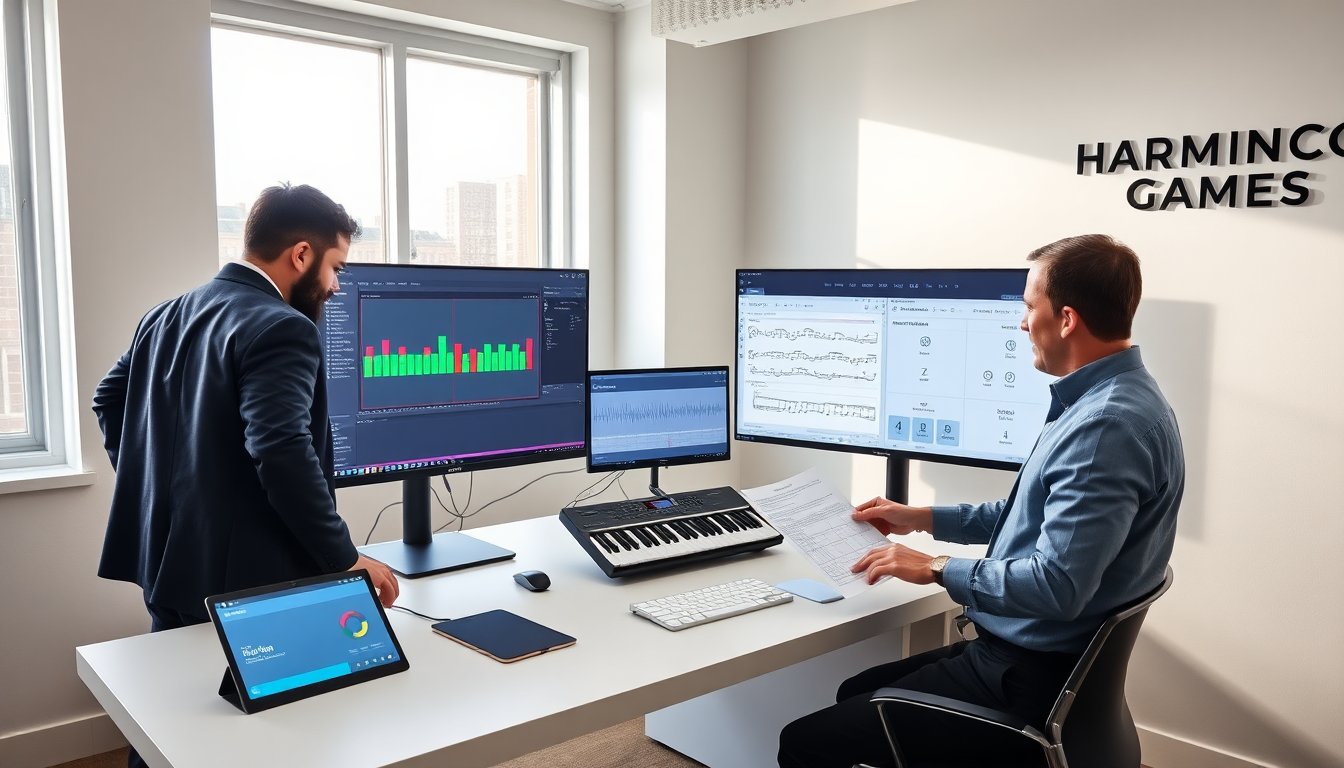
Harmonicode Gaming blends music and code in games. The studio crafts games that teach music through play. The team builds tools, composes score, and codes interactivity. They focus on clear mechanics, musical feedback, and player learning. This article explains who they are, their signature games, and the technology and community that shape their next moves.
Key Takeaways
- HarmoniCode Games integrates music education with gameplay to make learning music engaging and accessible through interactive mechanics.
- Their signature games—MelodyLab, BeatForge, and CodeChord—focus on melody, rhythm, and coding logic, using immediate auditory feedback and incremental difficulty for effective learning.
- The studio emphasizes visual-musical mapping and playful constraints to reinforce musical concepts clearly and keeps tutorials embedded in the gameplay for intuitive learning.
- HarmoniCode Games supports educators with design notes, lesson plans, and exportable progress reports to facilitate classroom use and track student improvement.
- They utilize a Unity-based pipeline, open file formats, and offer community tools like level editors and workshops to foster creativity and content sharing.
- Future plans include adaptive difficulty algorithms, multilingual support, expanded instrument compatibility, and partnerships to deepen music education impact.
Who HarmoniCode Games Are And Their Creative Vision
HarmoniCode Games formed in 2019 when two friends combined music training and software work. The studio focuses on games that mix rhythm, melody, and coding. They state that games should teach while they entertain. The team values simple rules, direct musical cause-and-effect, and tight feedback loops.
They describe their vision as making music feel reachable. The studio builds gradual learning curves. They break musical concepts into small, playable tasks. Players hear immediate change when they alter rhythm or pitch. That design choice keeps players engaged and helps them learn faster.
HarmoniCode Games keeps teams small. They hire composers, programmers, and user-experience designers. The studio uses player testing to refine lessons. They release short demos and iterate on feedback. They avoid long, opaque tutorials. Instead, they place instruction inside game mechanics. Players learn by doing.
The studio also aims for aesthetic clarity. The visuals support musical structure. Colors mark scale degrees. Shapes mark rhythmic values. That mapping helps players link sound to screen. The studio publishes design notes and lesson plans for teachers. They want educators to use games in classrooms and after-school programs.
HarmoniCode Games measures success by learning outcomes and player joy. They track retention, accuracy on musical tasks, and voluntary practice time. The team uses that data to shape future updates. They plan to expand to more instruments and to languages beyond English.
Signature Games And Core Gameplay Mechanics
HarmoniCode Games released three signature titles by 2026. Each title centers on a clear musical goal. The first game, MelodyLab, teaches melody and ear training. The second game, BeatForge, focuses on rhythm and timing. The third game, CodeChord, links simple programming logic to harmonic progressions.
MelodyLab uses pattern matching. Players hear short phrases and replay them with a limited note set. The game rewards precise pitch and phrasing. The scoring system highlights small improvements. Levels add new intervals and tighter timing windows.
BeatForge uses tap and hold mechanics. The game maps beats to lanes and visual pulses. Players tap in time to build percussion patterns. The system provides immediate correction and layered tracks to show how parts lock together. Players combine loops to build full arrangements.
CodeChord uses block-based coding. Players place blocks that represent musical functions. A block may change scale, transpose, or loop a phrase. When players connect blocks, they hear the chord sequence play. That direct mapping teaches sequencing and harmonic thinking.
Across titles, HarmoniCode Games uses these core mechanics:
- Immediate auditory feedback. The game plays the result of each action. Players hear mistakes and fixes.
- Incremental difficulty. Levels add one new concept at a time.
- Visual-musical mapping. The game shows scales, intervals, and rhythm visually.
- Playful constraints. The games limit choices to keep focus on learning.
The studio also builds modes for different audiences. A practice mode removes scoring for learners. A performance mode adds audience reaction and tighter timing. A teacher mode offers set lists, progress reports, and exportable play data. Schools can use those reports to track student progress.
Players and reviewers praise the studio for clarity and openness. Reviewers note that HarmoniCode Games avoids clutter and keeps the learning goal visible. Teachers report measurable gains in pitch recognition and rhythmic precision after a few sessions.
Technology, Tools, Community, And The Road Ahead
HarmoniCode Games builds most titles in a Unity-based pipeline. They use C# for game logic and Pure Data for sound patches. The team uses open file formats for lesson data. That choice lets teachers edit content and share it.
They also offer a web companion that syncs progress to cloud accounts. The web tool exports CSV reports and MIDI files. Teachers can import those files into standard music software. That interoperability helps integrate games into class workflows.
On tools, the studio releases a level editor for power users. The editor lets creators set note sets, rhythms, and feedback rules. Creators publish levels to a curated workshop. The studio moderates the workshop to keep content high quality.
The community forms around forums, Discord channels, and weekly livestreams. The studio hosts jam sessions where players share levels and performances. Those events reveal creative uses of the tools. Players remix game levels into longer compositions.
HarmoniCode Games funds ongoing work through a mix of direct sales, classroom licenses, and grants. They sell lifetime desktop licenses and subscription-based school plans. Grants support research on learning outcomes and accessibility.
The studio plans several technical upgrades. They will add adaptive algorithms that adjust difficulty to each player. They will support more input devices, including digital pianos and breath controllers. They will add multilingual support for UI and lesson text.
They also plan partnerships with instrument makers and music educators. Those partnerships aim to place curated lesson paths inside the games. The studio aims to measure learning with randomized tests and publish those findings.
By 2026, HarmoniCode Games remains small but influential. They show how focused design, clear feedback, and community tools can teach music through play. Their work offers a model for indie teams that want to make games with practical learning outcomes.

