
Have you ever found yourself sitting in front of a high-end gaming rig, surrounded by liquid cooling and glowing RGB lights, only to spend four hours playing something that looks like it was made for the Super Nintendo? It is a peculiar phenomenon, isn’t it? We have all this computing power at our fingertips, yet we are increasingly drawn to the chunky pixels and chirpy 8-bit soundtracks of yesteryear. But if you look a bit closer, you will see that these games aren’t just simple throwbacks. They are actually sophisticated machines that combine the competitive edge of modern esports with the visual charm of the eighties and nineties.
This crossover is what many are calling a digital synergy. It is a space where the old school meets the new school, creating a type of entertainment that feels both nostalgic and incredibly fresh. Whether you are climbing a competitive ladder or just having a quick go on a mobile app during your lunch break, the mechanics under the hood are more connected than you might think.
The Architecture of Modern Play: How Esports Mechanics are Redefining Engagement Loops
When we talk about esports, we often think of massive stadiums and professional players with lightning-fast reflexes. However, the true legacy of esports lies in how it has changed the way games are designed for everyone else. Modern developers have taken the “engagement loops” found in competitive gaming and applied them across the board.
An engagement loop is essentially the heartbeat of a game. It is the cycle of “action, reward, and expansion” that keeps us coming back. In the past, games were often linear; you started at level one and finished at level ten. Nowadays, influenced by the competitive nature of esports, games are built to be played indefinitely. They use clear feedback systems, like experience bars and rank badges, to tell us exactly how we are doing.
I find that this constant sense of progression is what makes modern play so addictive. It isn’t just about winning a match; it is about the incremental improvements we make. This focus on “skill-based progression” means that even the most casual experiences now have a “skill ceiling” that players can strive to reach. You see this in everything from battle royales to simple puzzle games. The mechanics are designed to make you feel like you are getting better, even if you only have ten minutes to spare.
The influence of esports has also brought about a shift toward “clarity of information.” In a high-stakes match, a player needs to know exactly what is happening at a glance. This requirement has bled into general game design, where menus are cleaner, hitboxes are more precise, and the overall “feel” of a game is much tighter than it used to be. It is about removing the friction between the player and the experience.
Retro-Futurism in UI/UX: Why 8-Bit and 16-Bit Aesthetics are Returning to High-Tech Platforms
While the mechanics are getting more complex, the visuals are, in many cases, going back to basics. This isn’t just about nostalgia, though that certainly plays a part for those of us who grew up with a controller in our hands. The return of 8-bit and 16-bit aesthetics is actually a very practical choice for modern user interfaces (UI) and user experiences (UX).
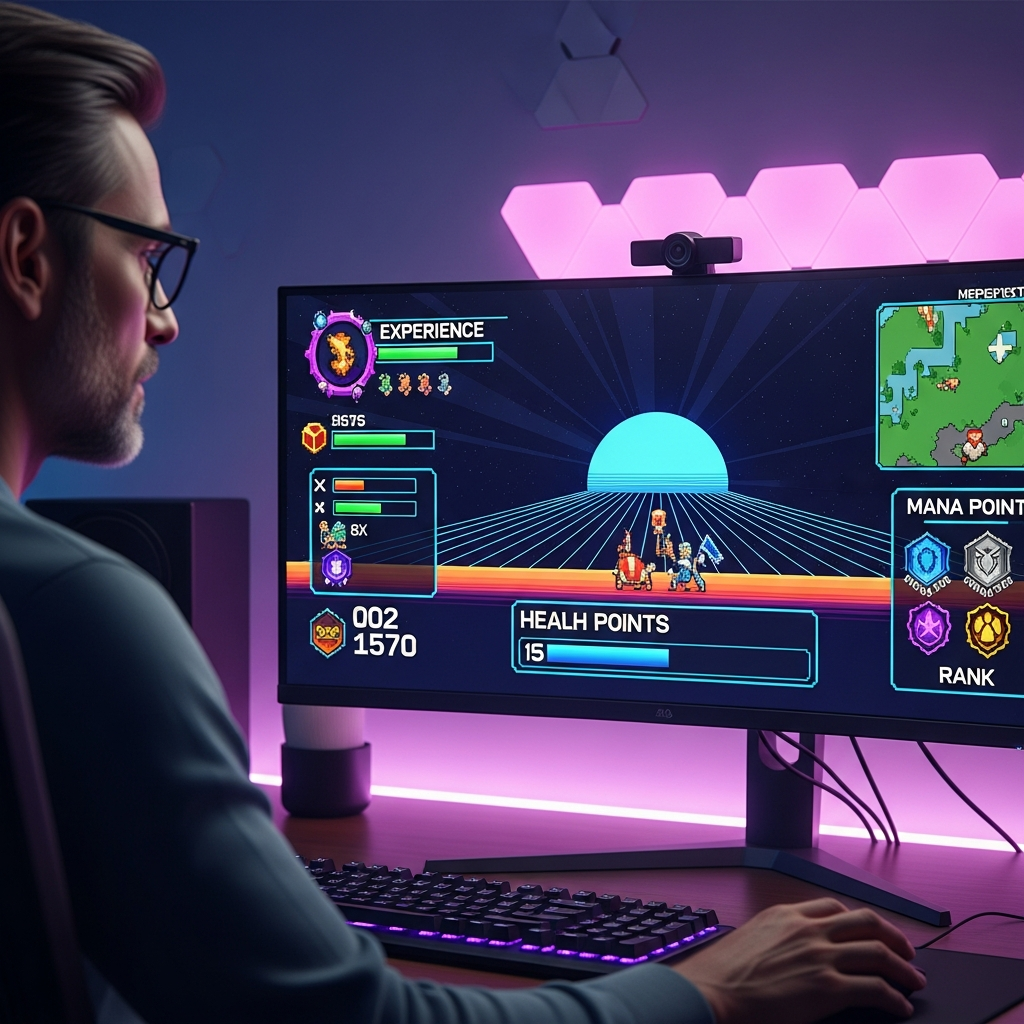
Think about the sheer amount of information we have to process on our screens these days. High-fidelity graphics can sometimes be a bit much; they can be cluttered and distracting. Pixel art, on the other hand, offers a level of abstraction that is very easy for the brain to parse. It is “Retro-Futurism” at its finest: using the visual language of the past to solve the design problems of the future.
Many high-tech platforms are adopting these aesthetics because they look great on everything from a massive 4K monitor to a tiny smartphone screen. Pixels are bold, the colours are vibrant, and the shapes are distinct. It is a look that doesn’t age in the same way that “realistic” graphics do. If you look at a game from 2010 that tried to be photorealistic, it probably looks a bit tired now. But a well-designed pixel art game from the same era still looks fantastic.
We are also seeing this trend in how we interact with apps. Buttons that look like something from an old arcade machine or loading bars that mimic a Commodore 64 screen aren’t just “cute” design choices. They provide a sense of warmth and personality in a world of sterile, flat design. They make the technology feel more human and accessible. By blending these high-fidelity backend systems with classic mechanics, developers are creating a middle ground that appeals to both the tech-savvy youth and the older generation of gamers.
The Invisible Code: Exploring the Role of RNG in Competitive Integrity and Fair Play
One of the most misunderstood parts of modern entertainment is the role of Random Number Generation, or RNG. Some people think of it as “just luck,” but in the world of competitive play, it is actually a vital tool for ensuring fairness and variety. Without a bit of randomness, games would become entirely predictable, and once a player figured out the “optimal” way to play, the fun would vanish.
In a competitive setting, RNG acts as the invisible referee. It ensures that every session is slightly different, forcing players to adapt and use their skills rather than just memorising a sequence of moves. This is where “competitive integrity” comes in. The best developers find a way to balance RNG so that it creates excitement without feeling unfair. It is about “controlled randomness.”
Within the section on gamification and RNG, the concept highlights how modern developers are blending high-fidelity graphics with classic mechanics to keep things interesting. You might have a game that looks like a 16-bit classic, but the engine running it is performing thousands of complex calculations a second to determine everything from loot drops to critical hits. This blend of simple visuals and complex math is what keeps the experience feeling “tight” and professional.
Many of us have experienced that moment where a bit of luck changed the course of a game. While it can be frustrating if it goes against you, it is also what creates those “water cooler moments” that we talk about with our friends. RNG provides the drama, while the mechanics provide the structure. Together, they create a balanced ecosystem where skill is rewarded, but surprises are always possible.
Digital Convergence: Analysing the Tech Behind Modern Online Casino Games and Skill-Based Progression
The final piece of this puzzle is how these different worlds are coming together. We are seeing a “digital convergence” where the lines between different types of interactive entertainment are blurring. A great example of this is how traditional gaming elements are appearing in places you might not expect.
When we look at online casino games as a technical case study, it is clear how these platforms utilise “five of our best online slots” style guides to illustrate the crossover between traditional gaming progression and modern interactive play. These platforms aren’t just about spinning reels anymore; they are becoming sophisticated pieces of software that use the same UX/UI principles as the biggest esports titles.
For instance, the use of “levelling up” systems, daily challenges, and unlockable visual themes are all techniques taken straight from the world of mainstream gaming. This transition is particularly evident in the way retro themes are used. By using 8-bit or 16-bit aesthetics, developers can create a sense of familiarity and fun that makes the technical complexity of the backend feel much more approachable. It is a way of bridging the gap between a casual pastime and a high-tech entertainment experience.
The tech behind these games is also becoming more transparent. Players today are more informed than ever; they want to know about the RTP (Return to Player) percentages and how the RNG systems work. This demand for transparency is a direct result of the competitive gaming culture, where “fair play” is the most important rule of all. As these industries continue to learn from each other, the quality of the user experience only gets better.
It is a fascinating time to be a fan of interactive media. We are in an era where the hardware is more powerful than ever, yet we are using that power to celebrate the simple joy of a well-placed pixel. By combining the rigorous mechanics of esports with the timeless appeal of retro design, developers are creating a new kind of digital synergy that really does offer the best of both worlds.
Please remember to keep things fun and stay in control. Always gamble responsibly. 18+ only. For help and support, visit BeGambleAware.org.
Whether you are a hardcore competitive player or someone who just enjoys the occasional round of a pixelated classic, it is clear that the future of entertainment is as much about where we have been as it is about where we are going. The pixels might be bigger, but the experiences are getting deeper every day. We aren’t just playing games anymore; we are participating in a constantly evolving digital culture that honours its roots while pushing the boundaries of what is possible. It’s a bit like having your cake and eating it too, isn’t it? Comfortable, familiar, yet consistently surprising.